
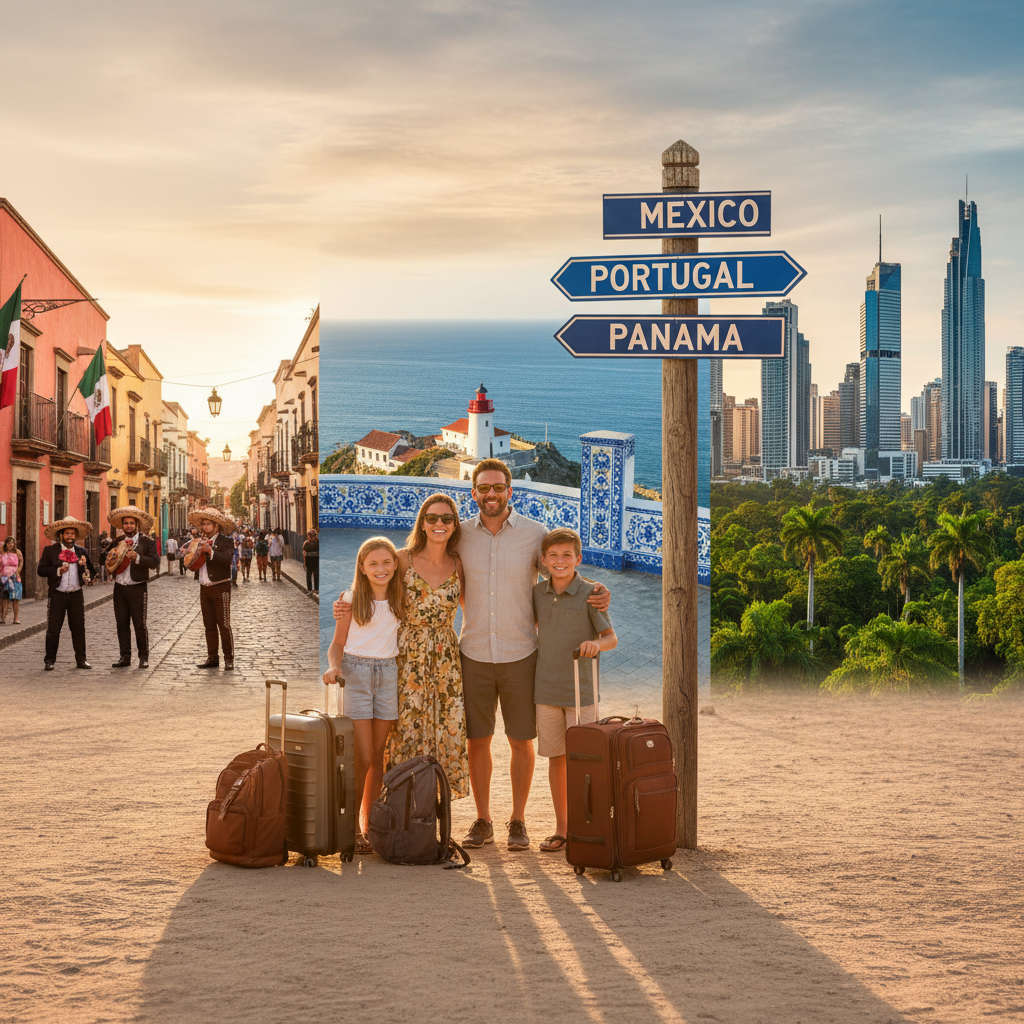
An investigative look at the surging wave of U.S. expatriates and the three destinations leading the charge.
Voyage JTravels
The Data Behind the Departure:
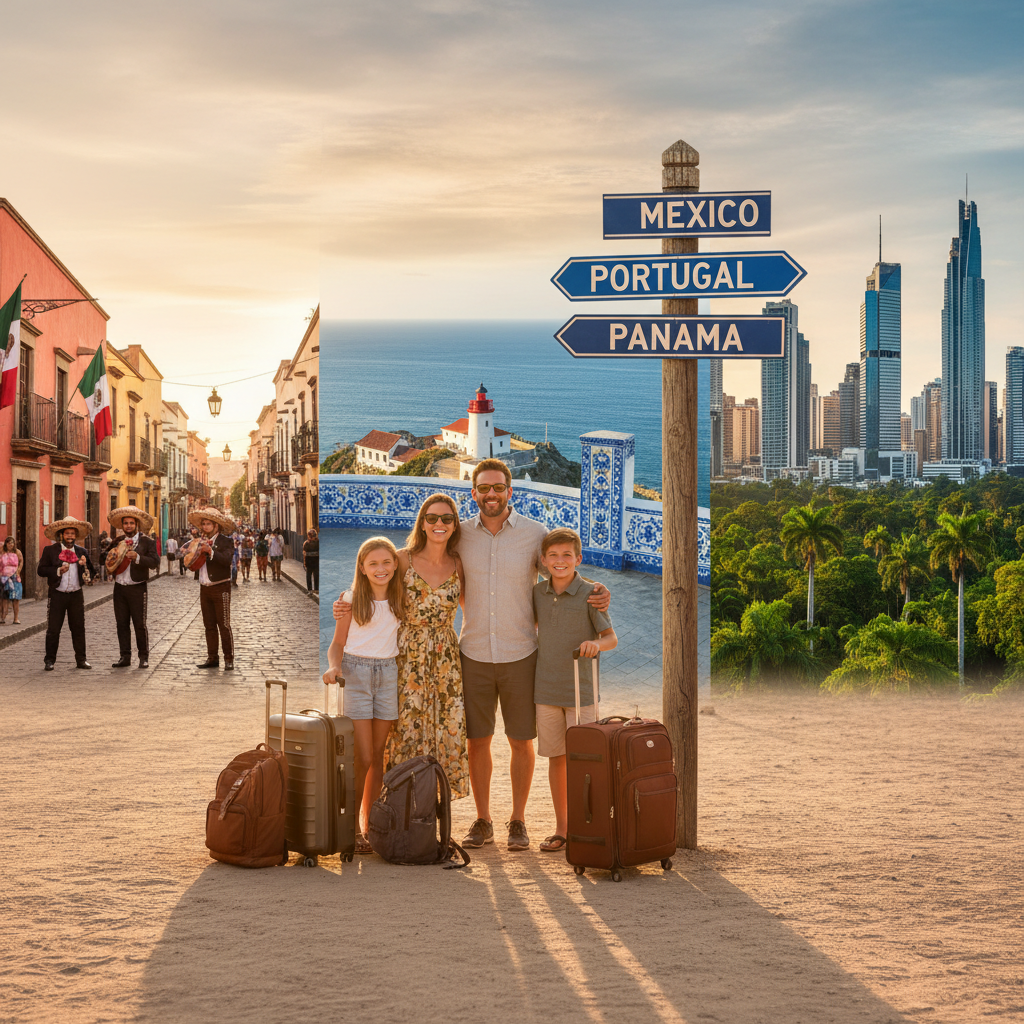
American family considering expat destinations Mexico, Portugal, and Panama
The exodus is real, and the numbers don’t lie. In the first quarter of 2025 alone, 1,285 Americans officially expatriated from the United States—a staggering 102% increase compared to the final quarter of 2024. This isn’t a fleeting trend driven by pandemic wanderlust or temporary remote work arrangements. This is a fundamental shift in how Americans are choosing to live, work, and retire, with an estimated 5.4 to 5.5 million U.S. citizens now calling foreign countries home.aaro+3
As Head JTravel Curator at Voyage JTravels, I’ve witnessed this transformation firsthand. Clients who once booked two-week European getaways now inquire about three-month exploratory stays in Mexico City, Porto, and Panama City. They’re not just vacationing—they’re auditioning their next chapter. And the data suggests they’re far from alone: a remarkable 17% of Americans report plans to move abroad within the next five years.clancymoving
But before you liquidate your assets and board that one-way flight, there’s a smarter approach: visit first, explore deeply, and make an informed decision. At Voyage JTravels, we specialize in creating immersive travel experiences that go beyond tourist attractions, giving you an authentic preview of expat life in your destination of choice. Because the best expatriate stories begin not with a leap of faith, but with a well-planned journey.
Understanding the American Expat Surge
Between 2000 and 2025, American expatriation evolved from a niche pursuit of adventurous retirees and corporate transfers into a mainstream lifestyle choice spanning all demographics. The trajectory reveals several distinct phases.
The Early 2000s: The Slow Trickle
In the early 2000s, Americans living abroad numbered approximately 4 million, concentrated primarily in traditional expatriate hubs—military personnel, missionaries, corporate executives, and retirees seeking lower costs in Mexico and Central America. The motivations were straightforward: economic arbitrage for retirees or career advancement for professionals.workingimmigrants
The 2008-2015 Period: Economic Catalysts
The 2008 financial crisis triggered the first significant wave of economic migrants. As housing markets collapsed and job prospects dimmed, Americans began exploring overseas opportunities with renewed urgency. Countries like Ecuador and Costa Rica saw their expatriate populations double during this period, driven largely by retirees seeking to stretch Social Security benefits further.savvynomad
2015-2020: The Digital Revolution
The rise of remote work platforms and digital nomadism fundamentally altered the expatriate landscape. No longer constrained by geographic proximity to employers, knowledge workers discovered they could earn U.S. salaries while enjoying drastically lower costs of living abroad. Mexico saw a 27% increase in its American population during this period, while Portugal experienced a 30% surge.internationalinsurance+1s3.amazonaws

Remote work lifestyle in coastal Mexico for American expats
2020-2025: The Acceleration
The COVID-19 pandemic served as an inflection point. With remote work normalized overnight and Americans confined to evaluating their domestic quality of life without distraction, the flaws became impossible to ignore. Political polarization intensified, healthcare costs continued their upward trajectory, and safety concerns mounted in urban centers.hudsonmckenzie+1
The numbers reflect this acceleration: Mexico now hosts between 1.2 and 1.6 million Americans, making it the largest expatriate destination by a significant margin. Portugal’s American population has nearly tripled since 2024, with 40% concentrated in the Lisbon metropolitan area. Panama, despite its smaller size, ranks as the number-one destination for expatriate happiness, with a remarkable 94% satisfaction rate.workingimmigrants+4
2026 and Beyond: Projected Growth
Multiple factors suggest this trend will intensify. The ongoing normalization of remote work, combined with persistent domestic challenges—housing affordability crises, healthcare cost inflation, political instability, and safety concerns—creates a perfect storm for continued expatriate growth. Conservative projections suggest the American expatriate population could reach 6.5 to 7 million by 2030, with Mexico, Portugal, and Panama capturing the lion’s share of this growth.YouTubehudsonmckenzie
The Top Three Destinations: Where Americans Are Actually Moving
After analyzing immigration data, expatriate satisfaction surveys, and growth trends from 2000 through 2025, three destinations emerge as clear leaders for American expatriates. Each offers distinct advantages, and understanding their unique characteristics is essential for anyone considering a move—or planning an exploratory visit with Voyage JTravels.
1. Mexico: The Proximity Powerhouse
Mexico reigns as the undisputed leader, hosting somewhere between 1.2 and 1.6 million American residents. This represents the largest expatriate population of any country globally, and the reasons are immediately apparent.workingimmigrants+2
Geographic Advantage: Unlike any other major expatriate destination, Mexico shares a land border with the United States. Americans can drive across the border with their own vehicles, visit family in the U.S. with minimal hassle, and access familiar products and services easily. Major U.S. cities are accessible within two hours by air from Mexican hubs like Mexico City, Guadalajara, and Cancún.YouTubeinternationalliving
Economic Accessibility: Monthly living expenses in Mexico average just $651 for a single person and $2,357 for a family of four—representing savings of 30-40% compared to comparable U.S. cities. Rent in Mexico City costs approximately 50-70% less than similar apartments in major U.S. metropolitan areas.movebuddha+1
Cultural Richness: Mexico offers Americans a vibrant cultural experience without extreme culture shock. English is widely spoken in expatriate hubs, American chains provide comfort-food options, and the Mexican emphasis on family and community resonates with Americans seeking connection.internationalinsurance+1
Growth Trajectory: Mexico experienced 27% expatriate population growth between 2020 and 2025, with particularly strong increases in Mexico City, San Miguel de Allende, Playa del Carmen, Puerto Vallarta, and the Lake Chapala region.savvynomad+1s3.amazonaws

American expats exploring Lisbon’s historic neighborhoods in Portugal
2. Portugal: The European Gateway
Portugal has emerged as the fastest-growing American expatriate destination, with the population nearly tripling between 2024 and 2025. Approximately 40% of American expatriates in Portugal reside in the Lisbon metropolitan area, with Porto and the Algarve region capturing significant shares.internationalinsurance+1
European Access: Portugal’s strategic location on Europe’s southwestern edge provides unparalleled access to the continent. Budget airlines connect Lisbon and Porto to dozens of European cities for under €50, making weekend trips to Barcelona, Paris, or Rome entirely feasible. Portugal has been named Europe’s leading travel destination six times since 2017, a testament to its appeal as both a home base and launching point for European exploration.gettransferYouTube
Safety and Stability: Portugal consistently ranks among the world’s safest countries, frequently appearing in the top 10 of the Global Peace Index. Violent crime is rare, and the country maintains a welcoming attitude toward expatriates, ranking 15th out of 53 countries in the 2024 Expat Insider survey.reddit+1
Fast-Track Citizenship: Portugal offers one of the shortest paths to EU citizenship—just five years of residency, compared to 6-10 years required by Spain, Greece, or Hungary. This accelerated timeline attracts Americans seeking long-term European residence and the mobility benefits of EU citizenship.thegoldenportugal
Cost Advantage: Living costs in Portugal run 30-45% lower than comparable U.S. cities. Monthly budgets for a single person range from €1,000-1,400 ($1,100-1,600), while couples live comfortably on €2,000-2,600 ($2,300-3,000). Healthcare, dining, and transportation costs are dramatically lower than U.S. equivalents.taxesforexpats+2
Climate and Lifestyle: With over 300 days of annual sunshine in regions like the Algarve, mild winters, and a Mediterranean lifestyle emphasizing work-life balance, Portugal delivers the quality of life that 85% of expatriates cite as a primary relocation driver.imin-portugal+1
3. Panama: The Retiree’s Paradise
Panama may host fewer American expatriates in absolute numbers than Mexico or Portugal, but it claims the top spot in expatriate satisfaction, with 94% of residents reporting happiness with their life abroad. The country ranks first overall in the 2025 Expat Insider survey, with all five measured indices placing in the top three.internations
Economic Simplicity: Panama uses the U.S. dollar as its official currency, eliminating exchange rate risk and simplifying financial planning for American expatriates. This dollarized economy provides stability and familiarity that appeals particularly to retirees managing fixed incomes.taxesforexpats
Retirement Infrastructure: Panama designed its immigration system explicitly to attract foreign retirees, offering the Pensionado visa—considered one of the world’s best retirement programs. The program provides substantial discounts on entertainment, dining, healthcare, and transportation for qualifying retirees.clancymoving+1
Geographic Diversity: Despite its small size, Panama offers remarkable diversity: modern urban living in Panama City, mountain retreats in Boquete with spring-like weather year-round, and beach communities along both Pacific and Caribbean coasts. Americans can experience dramatically different lifestyles within a two-hour drive.movebuddha+1
Cost of Living: Panama’s overall cost of living runs 33% lower than the United States, with rent averaging 44% less. Monthly expenses for a family of four (excluding rent) hover around $2,892, compared to $4,100+ in comparable U.S. cities.taxesforexpats+1s3.amazonaws
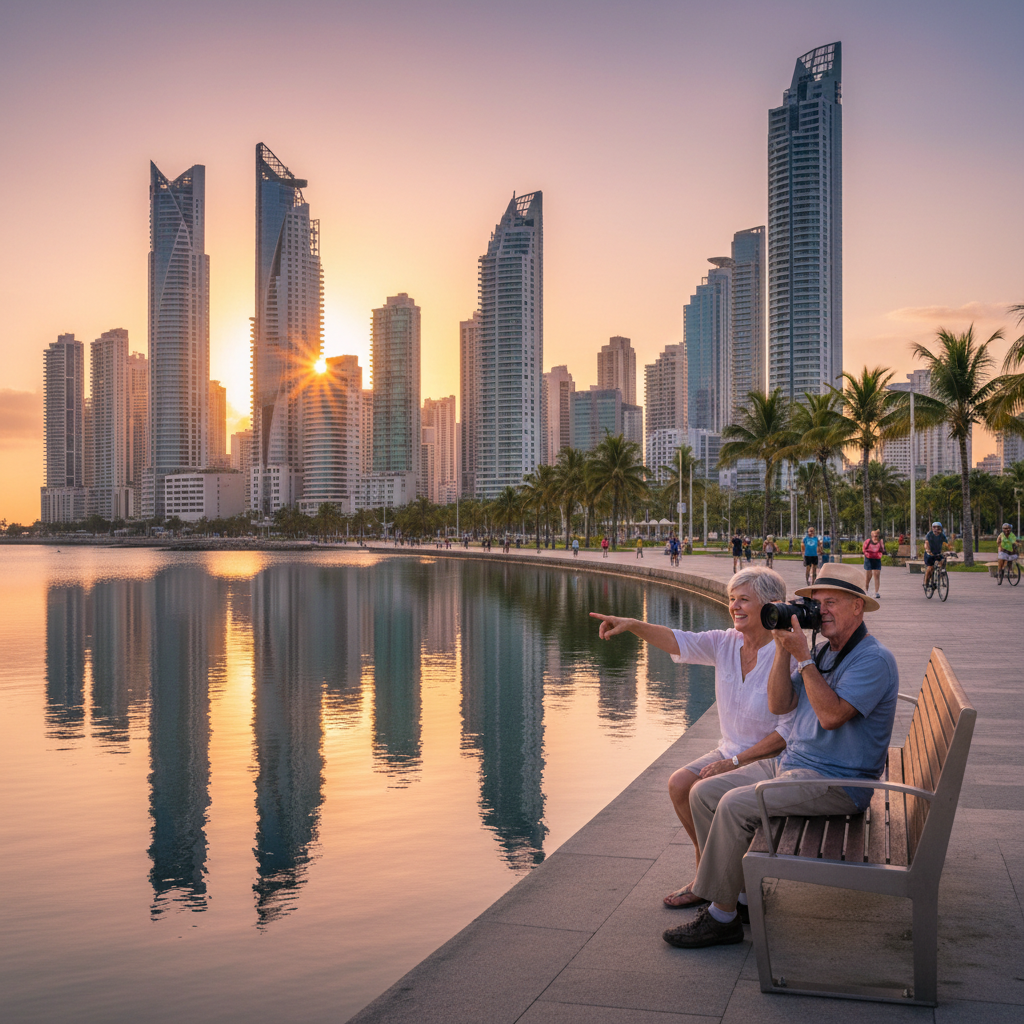
American retirees enjoying Panama City’s modern waterfront and skyline
Latin American Hub: Panama City International Airport serves as Latin America’s largest air hub, providing convenient connections throughout Central and South America. This connectivity appeals to Americans who want to explore the broader region.internationalliving+1
The Five Driving Forces: Why Americans Are Leaving
Understanding why Americans choose expatriation requires examining the convergent forces that make this option increasingly attractive. Five primary drivers emerge from the data:
1. Cost of Living and Affordability Crisis
A staggering 86% of American families cite more affordable living as their top reason for relocating abroad. This isn’t merely about saving money—it’s about financial survival and quality of life.internationalinsurance
The Housing Crisis: Housing costs in major U.S. metropolitan areas have become prohibitive. The average rent for a one-bedroom apartment in San Francisco exceeds $3,000 monthly, while comparable accommodations in Lisbon cost €800-1,000 ($880-1,100). In Mexico City’s desirable neighborhoods, expats secure modern one-bedroom apartments for $700-900 monthly.movebuddha+1
Purchasing Power: The same income that provides a paycheck-to-paycheck existence in Boston or Seattle funds a comfortable, savings-oriented lifestyle abroad. Americans earning $60,000 annually—barely middle-class in coastal U.S. cities—can afford domestic help, regular dining out, and ample travel throughout Mexico, Portugal, or Panama.taxesforexpats+2
Inflation Impact: While U.S. inflation has moderated from pandemic highs, accumulated price increases since 2020 have permanently elevated baseline living costs. Americans allocate larger portions of income to necessities, leaving little room for savings or discretionary spending. Abroad, these same Americans regain financial breathing room.outboundinvestment
2. Healthcare Cost Crisis
Healthcare represents perhaps the starkest contrast between the United States and popular expatriate destinations. The average American spends thousands of dollars annually on health insurance premiums alone, before accounting for deductibles, copayments, and uncovered expenses.outboundinvestment
Cost Comparison: A private doctor’s visit in Portugal costs €50-80 ($55-88), compared to $150-300 in the United States—a 65-75% savings. Mexico offers high-quality private healthcare at similarly reduced rates, while Panama’s modern medical facilities charge a fraction of U.S. prices for identical procedures.taxesforexpats+2
Universal Systems: Portugal provides access to its public healthcare system (SNS) for residents, offering comprehensive coverage for minimal cost. While private insurance remains popular among expatriates for shorter wait times, annual premiums rarely exceed $2,000—less than many Americans pay quarterly in the U.S..reddit+2
Medical Tourism: The rise of medical tourism reflects Americans’ frustration with domestic healthcare costs. Rather than paying $30,000 for a procedure in Houston, they fly to Mexico City or Panama City, receive equivalent care for $8,000, enjoy a week of recovery in a beautiful setting, and still save money.outboundinvestments3.amazonaws

Top five reasons Americans are choosing to expatriate and move abroad
3. Political and Social Polarization
Political divisions in the United States have intensified dramatically since 2015, creating an environment many Americans find exhausting and alienating. This driver transcends partisan affiliation—Americans across the political spectrum report seeking stability and reduced social tension abroad.hudsonmckenzie+1
Polarization Fatigue: The constant news cycle, social media conflicts, and increasingly hostile public discourse take a psychological toll. Americans abroad consistently report relief at escaping this environment, describing foreign countries as having “normal” political disagreements rather than existential battles.outboundinvestment+1
Social Stability: Countries like Portugal and Panama offer political stability without the intense polarization characterizing U.S. politics. While these nations have political disagreements, they lack the inflammatory rhetoric and social divisions that have become standard in American life.reddit+1
Value Alignment: Some Americans seek countries whose social policies better align with their personal values—whether progressive policies in Portugal or traditional values in parts of Latin America. This isn’t political flight but rather selecting an environment that feels more compatible.wikipedia+1
4. Work-Life Balance and Quality of Life
Americans work the ninth-most hours globally and far longer than workers in almost all European countries. The pursuit of the “American Dream” increasingly comes at the expense of personal well-being and family time.outboundinvestment
The European Model: Portugal exemplifies the alternative approach, where 94% of workers avoid long hours and society prioritizes leisure, family time, and cultural engagement. The typical Portuguese work week rarely exceeds 40 hours, and lengthy lunches and social interactions remain cultural priorities.imin-portugal
Slow Living: American expatriates consistently describe their overseas lifestyle as more “human-paced.” In Mexico’s colonial cities or Portugal’s coastal towns, life revolves around community, relationships, and experiences rather than productivity metrics and career advancement.travelmexicosolo+1
Outdoor Lifestyle: Climate plays a significant role. Portugal’s 300+ annual sunshine days, Mexico’s year-round warmth, and Panama’s tropical environment enable outdoor lifestyles impossible in much of the United States. Americans rediscover hobbies, social activities, and family time.internationalliving+2
5. Safety and Security Concerns
Personal and family safety has emerged as a growing motivation for American expatriation, particularly for families with children.outboundinvestment+1
Urban Challenges: Major American cities face mounting challenges—homelessness, drug addiction, property crime, and inadequate public services—that have degraded perceptions of safety. While crime exists everywhere, the nature and visibility of urban problems in the U.S. drives some Americans to seek alternatives.outboundinvestment
Gun Violence: The United States’ unique prevalence of gun violence, particularly mass shootings in schools and public spaces, motivates some families to relocate. Countries like Portugal, where gun ownership is strictly regulated and violent crime is rare, offer peace of mind.reddit+1
Community Safety: Expatriate destinations popular with Americans generally maintain safe environments with visible security, active street life, and community-oriented public spaces. While perfect safety exists nowhere, the day-to-day sense of security in places like Panama or Portugal’s smaller cities exceeds what many Americans experience at home.internations+1
The Financial Reality: What It Actually Costs to Make the Move
Relocating internationally involves substantial upfront investment, though costs vary dramatically based on destination, household size, and moving strategy. Understanding these expenses helps Americans plan realistically.
Moving Cost Breakdown
Mexico: $2,000 – $15,000
The Mexico cost range reflects dramatically different approaches:movebuddha+1YouTube
- Minimal approach ($2,000-4,000): Flying with luggage only, no international movers, renting furnished accommodations, buying necessities locally
- Moderate approach ($7,750-11,000): Flights for family, shipping limited belongings via sea freight, three-month settling-in budget, temporary accommodation
- Comprehensive approach ($12,000-15,000): Full household goods shipping, vehicle importation, extended temporary housing, complete setup costs
Initial visa fees range from $300-400, with immigration facilitator services adding $200-600. Americans often spend $600-1,200 on initial groceries, household items, and establishing basic utilities.mexicorelocationguideYouTube
Portugal: $5,200 – $21,700
Portugal’s higher costs reflect both distance and European price levels:globalcitizensolutions+1
- Studio/1-bedroom move ($5,200-8,000): Sea freight shipping container, airfare, initial deposits
- 2-bedroom move ($10,400-13,700): Larger container, family airfare, more substantial setup costs
- 3-4 bedroom move ($15,400-21,700): Full household shipping, multiple travelers, comprehensive relocation services
Shipping a 20-foot container from New York to Lisbon costs approximately €1,229 ($1,350) via sea freight or €2,705 ($3,000) via air freight. One-way airfare averages €382 ($420) per person, with higher costs from the West Coast.globalcitizensolutions
Panama: $7,000 – $14,000
Panama’s costs fall between Mexico and Portugal, with an average of $9,500 for two people:movebuddha
- Sea freight shipping: $2,000-3,500 depending on container size and origin city
- Airfare for two: Approximately $1,500 from major U.S. hubs (Miami, Houston, Los Angeles have direct flights)
- Visa fees: $200-2,000+ depending on visa type and attorney fees
- Settling-in costs: First month’s rent, groceries, household necessities ($2,000-4,000)
Cost of Living Comparison
The ongoing cost of living determines whether expatriation remains financially viable long-term.
| Category | United States | Mexico | Portugal | Panama |
|---|---|---|---|---|
| Single Person (monthly) | $3,000-4,500 | $651-850 | €1,000-1,400 ($1,100-1,600) | $805 |
| Family of Four (monthly) | $6,000-8,500 | $2,357-3,000 | €2,500-3,000 ($2,750-3,300) | $2,892 |
| 1BR Rent (city center) | $2,000-3,500 | $700-900 | €800-1,000 ($880-1,100) | $1,113 |
| Healthcare (private visit) | $150-300 | $30-50 | €50-80 ($55-88) | $40-70 |
| Groceries (monthly) | $400-600 | $200-300 | €200-300 ($220-330) | $299 |
| Overall Savings vs US | Baseline | 30-40% less | 30-45% less | 33% less |
*Sources: *movebuddha+4
These figures demonstrate the substantial ongoing savings Americans achieve abroad. A couple earning $75,000 annually—solidly middle-class but stretched thin in U.S. coastal cities—lives comfortably with ample savings in any of these three destinations.
The Challenges: What the Glossy Brochures Don’t Tell You
Expatriate life isn’t perpetual vacation. Understanding the genuine challenges helps Americans make informed decisions and prepare adequately. Here’s the unvarnished truth about the disadvantages of each destination.
Mexico: The Hidden Frustrations
While Mexico’s affordability and proximity attract Americans, several frustrations surprise newcomers:joyandjourney+1YouTube
Noise Pollution: Mexican culture embraces noise in ways Americans find jarring. All-night parties are standard even in upscale neighborhoods, with music frequently blaring until 4 a.m. or later. Trucks with loudspeakers advertising products cruise residential streets. Fireworks explode randomly at all hours. Church bells ring constantly. Americans accustomed to noise ordinances and quiet evenings find this adjustment particularly difficult.justaflyaway+1
Police Corruption: Bribery remains commonplace when dealing with Mexican police, particularly for traffic violations. While the amounts are typically small ($20-50), the practice feels deeply wrong to Americans raised to trust law enforcement. Corrupt officers target foreigners specifically, knowing they’re unfamiliar with local norms and unlikely to fight back.travelmexicosolo+1
The “Gringo Tax”: Foreigners routinely pay inflated prices for rent, taxis, restaurant bills, and services. While not universal, opportunistic sellers specifically charge foreigners more, capitalizing on newcomers’ ignorance of fair pricing. This practice breeds resentment and distrust.eatwalklearn+1
Safety Concerns: While expatriate communities are generally safe, only 66% of expatriates in Mexico report feeling safe, compared to 80% globally. Underlying tensions, visible poverty, and occasional crime create low-level anxiety for some Americans.YouTube
Cash Economy: Despite Mexico’s modernization, cash remains king. Many businesses refuse credit cards or charge convenience fees for electronic payment. This creates constant ATM visits and physical money management that Americans find archaic.joyandjourney+1
Bureaucratic Inefficiency: Opening a bank account can require five hours at the bank. Government offices operate on inscrutable schedules. Simple transactions require multiple visits, extensive paperwork, and incomprehensible explanations. Without fluent Spanish, these processes become nearly impossible.joyandjourney
Portugal: The Unexpected Downsides
Portugal’s appeal is substantial, but several factors frustrate American expatriates:reddit+2
Low Local Salaries: Americans working for Portuguese employers face a harsh reality—local salaries average 40-60% less than equivalent U.S. positions. The country’s affordability assumes foreign income; local wages barely cover modest expenses even with lower costs.imin-portugal
Tourist Overcrowding: Summer months bring overwhelming tourist crowds to Lisbon, Porto, and the Algarve. Popular neighborhoods become packed with tour groups, prices spike, and the authentic Portuguese experience disappears under a wave of international visitors.imin-portugal
Lack of Central Heating: Portuguese homes traditionally lack central heating, assuming mild winters require only space heaters. While winters are objectively mild by northern U.S. standards, the indoor cold and dampness shock Americans accustomed to controlled climate.getnifportugal+1
Slow Pace: Portugal’s relaxed lifestyle becomes frustrating when you need something done. Service feels glacial, bureaucracy moves at a crawl, and the Portuguese attitude of “It will happen when it happens” conflicts with American efficiency expectations.imin-portugal
Limited Cashless Payments: Despite European advancement, many Portuguese businesses remain cash-only or strongly prefer cash. Small restaurants, markets, and service providers resist electronic payment, requiring Americans to carry physical currency constantly.getnifportugal+1
Panama: The Overlooked Obstacles
Panama rates highest for expatriate satisfaction, but challenges exist:taxesforexpats+2
Higher Grocery Costs: Imported goods cost significantly more than in the United States. Milk costs 55% more than comparable U.S. prices, and familiar American brands command premium prices. While local products remain affordable, Americans craving home-country items pay dearly.movebuddha
Local Salary Limitations: Panama’s average monthly salary is just $828. Americans relying on local employment face severe financial constraints unless working for international companies or maintaining foreign income sources.movebuddha
Limited Public Transportation: Outside Panama City, public transportation is limited and inefficient. Americans without cars find themselves geographically constrained, particularly in beach communities or mountain towns.panamarelocationtours+1
Tropical Climate Challenges: Panama’s heat and humidity are relentless. Mold grows rapidly, air conditioning runs constantly (increasing electricity costs), and the lack of seasonal variation frustrates Americans who enjoy distinct seasons.internationalliving+1
The Gains: What Makes It All Worthwhile
Understanding the advantages helps Americans recognize whether expatriate life aligns with their priorities and values. The benefits extend far beyond cost savings.
Mexico’s Unmatched Convenience
Proximity to Home: No other destination offers Mexico’s accessibility. Americans drive across the border, fly home for long weekends, and maintain close connections with U.S.-based family and friends without prohibitive expense or time investment. Major U.S. cities are 2-3 hours away by air, and border crossings by land take minutes in many locations.internationalliving+1
Cultural Richness Without Extreme Shock: Mexico provides genuine cultural immersion while maintaining enough familiarity to ease transition. English is widely spoken in expatriate hubs, American products are readily available, and the food—while distinctly Mexican—doesn’t require radical dietary adaptation.internationalinsurance+1
Extraordinary Transportation Infrastructure: Mexico’s bus system rivals first-world standards, with comfortable, frequent service connecting every part of the country. Flights within Mexico cost $100 or less even with checked bags, making domestic travel remarkably affordable. Within cities, excellent public transportation, cheap taxis, and walkable colonial centers eliminate car dependency.cheapestdestinationsblog
Climate Diversity: Mexico offers every climate preference—tropical beaches, temperate highlands, desert environments, and everything between. Americans find their ideal weather without leaving the country.cheapestdestinationsblog
Portugal’s European Elegance
Gateway to Continental Exploration: Portugal’s position enables effortless European travel. Budget flights to Barcelona cost €30, weekend trips to Paris run €80 roundtrip, and Morocco lies a quick ferry ride away. Americans with wanderlust use Portugal as a home base for exploring dozens of countries.gettransfer+1YouTube
Fast-Track EU Citizenship: Five years of residency yields Portuguese citizenship and full EU freedom of movement. This represents one of the shortest paths to European citizenship, opening permanent residence and work rights across 27 countries.thegoldenportugal
Safety and Social Stability: Portugal consistently ranks among the world’s safest countries, with virtually no violent crime. Walking alone at night, letting children play independently, and feeling genuinely secure become normal rather than anxiety-inducing.reddit+2
High English Proficiency: Portugal ranks among Europe’s highest for English proficiency, particularly among younger generations and in expatriate-heavy areas. While learning Portuguese improves the experience, Americans function well initially with English alone.remitly+1
Mediterranean Lifestyle: Portugal embodies the Mediterranean approach to life—lengthy meals with friends and family, afternoon siestas, evening passeios (strolls), and prioritization of human connection over productivity. Americans rediscover the social engagement and community missing from car-dependent U.S. suburbs.imin-portugal+1s3.amazonaws

Multiple income streams sustaining American expats living abroad through remote work
Panama’s Practical Perfection
Dollarized Economy: Using the U.S. dollar eliminates exchange rate risk, currency conversion hassles, and inflation uncertainty. Americans manage finances exactly as they would domestically, without learning new systems or facing currency depreciation.taxesforexpats+1
Latin American Hub: Panama City’s airport provides unmatched access throughout Central and South America. Weekend trips to Costa Rica, Colombia, or Ecuador cost a fraction of equivalent U.S. trips, enabling extensive regional exploration.internationalliving+1
Tailored Retirement Benefits: Panama’s Pensionado visa offers substantial discounts—20-50% off entertainment, restaurants, hotels, medical services, and utilities. These savings compound over retirement, dramatically extending fixed income purchasing power.clancymoving+1
English Prevalence: Panama’s historical U.S. connection means English is widely spoken, particularly in Panama City and expatriate communities. Americans function comfortably without Spanish fluency, though learning the language enhances the experience.panamarelocationtoursYouTube
Geographic Diversity: Despite its small size, Panama offers dramatic geographic variety within short distances—modern urban living, mountain highlands with spring-like climates, and both Pacific and Caribbean beaches. Americans sample multiple lifestyles before committing.movebuddha+2
Making a Living Abroad: Income Strategies for Sustainability
The romantic notion of expatriate life confronts a practical reality: Americans still need income. Understanding sustainable income strategies separates successful long-term expatriates from those who return home within a year.
Remote Employment for U.S. Companies
The most straightforward approach maintains existing employment while relocating physically. If your current employer permits remote work and accepts international employees, you preserve your U.S. salary while enjoying dramatically lower living costs abroad.YouTubeuniversaltaxprofessionals+1
Requirements: Reliable high-speed internet, willingness to work U.S. hours (potentially requiring night work depending on time zones), and employer approval for international residence. Some companies prohibit international remote work due to tax complications, while others embrace globally distributed teams.
Tax Implications: Americans working remotely for U.S. companies can utilize the Foreign Earned Income Exclusion (FEIE), excluding up to $130,000 of foreign-earned income from U.S. taxation in 2025. This applies even when working for U.S. employers, as the key factor is physical location where work is performed. Self-employment taxes (15.3%) still apply to net earnings, but income tax liability can drop to zero for many workers.onlinetaxman+5
Best Destinations: Mexico’s proximity to U.S. time zones makes it ideal for East Coast or Midwest workers. Portugal and Panama require greater schedule flexibility due to 5-8 hour time differences.
Freelancing and Consulting
Americans with marketable skills—writing, design, programming, marketing, accounting, legal services—can build freelance businesses serving global clients.YouTubeuniversaltaxprofessionals+1
Platform Work: Sites like Upwork, Fiverr, and Toptal connect freelancers with clients worldwide. While platform fees reduce income, they provide client pipelines without independent marketing efforts.
Direct Client Relationships: Experienced freelancers often transition from platforms to direct client relationships, increasing rates and reducing fees. This requires business development skills but offers significantly higher income potential.
Income Variability: Freelancing creates income unpredictability. Successful expatriate freelancers maintain 3-6 months of expenses in emergency funds to weather slow periods.expatcpaYouTube
Tax Complexity: Self-employed Americans abroad face the full 15.3% self-employment tax on net earnings, even when utilizing the FEIE for income tax. However, business expense deductions (home office, equipment, professional development, travel) reduce taxable income substantially.onlinetaxman+3
Digital Products and Online Businesses
Creating scalable digital businesses—online courses, ebooks, software, membership sites—provides location-independent income without trading time for money directly.YouTubeextraspace
Upfront Investment: Building digital products requires substantial upfront work before generating income. Americans should maintain existing income sources while developing these revenue streams.
Passive Income Reality: “Passive income” is largely a myth—digital products require marketing, customer support, and ongoing updates. However, income potential scales beyond hourly limitations.
Tax Treatment: Digital product income qualifies as self-employment income for Americans abroad, subject to self-employment tax but eligible for FEIE provisions.onlinetaxman+1
Retirement Income: Pensions and Social Security
Retirees represent a significant portion of American expatriates, relying on Social Security, pensions, and investment income.blacktowerus+2
Social Security Abroad: U.S. citizens receive Social Security benefits in most countries worldwide, including Mexico, Portugal, and Panama. The Social Security Administration deposits benefits directly into U.S. or foreign bank accounts, though some Americans maintain U.S. accounts and transfer funds as needed.sjb-global+1
Pension Income: Corporate and government pensions generally transfer abroad without issues, though some pensions have restrictions on long-term international residence. Retirees should verify their specific pension rules before relocating.skyboundwealth+1
Tax Considerations: Social Security and pension income don’t qualify for the FEIE, remaining fully taxable by the U.S.. However, many expatriate destinations tax foreign-source retirement income at reduced rates or not at all. Portugal’s Non-Habitual Resident (NHR) program, for example, offers a flat 10% tax rate on foreign pensions for the first ten years.getnifportugal+2
Currency Risk: Retirees receiving U.S. dollar income face currency risk when living in countries using other currencies. Panama’s dollarized economy eliminates this concern, while Mexico’s peso and Portugal’s euro fluctuate against the dollar, affecting purchasing power.taxesforexpats+1
Investment Income and Real Estate
Americans with investment portfolios or rental properties maintain income streams while living abroad.extraspace+2
Rental Income from U.S. Property: Renting out a U.S. home generates income while preserving the asset for potential return. Property management companies handle day-to-day operations, though landlords remain responsible for major decisions and expenses.extraspace
Investment Portfolios: Americans maintain U.S. brokerage accounts while abroad, continuing to invest and withdraw as needed. Required Minimum Distributions (RMDs) from retirement accounts still apply, and investment income remains taxable but doesn’t qualify for the FEIE.blacktowerus+1
Foreign Bank Account Reporting: Americans with more than $10,000 in foreign bank accounts must file FinCEN Form 114 (FBAR) annually. This reporting requirement doesn’t create tax liability but carries severe penalties for non-compliance.sjb-global+1
Teaching English and Service Industry Work
Americans without remote income sources sometimes pursue local employment opportunities.YouTubeextraspace
English Teaching: Private English tutoring and language school positions provide income, though rates rarely exceed $15-25 hourly unless teaching business English or test preparation. This income typically suffices in affordable locations but doesn’t support U.S.-level lifestyles.extraspace
Service Industry: Americans with work permits can pursue restaurant, hospitality, or retail positions, though local salaries barely cover expenses even in affordable countries. This approach works for younger Americans seeking cultural immersion more than income maximization.extraspace
Work Permit Requirements: Most countries require specific work permits for local employment, which can be difficult to obtain unless sponsored by employers. Americans pursuing this route should research visa requirements thoroughly.YouTubeextraspace
The Travel Advantage: Using Your New Home as a Launch Pad
Expatriate life offers extraordinary travel opportunities impossible from a U.S. base, transforming weekends and holidays into genuine adventures rather than expensive, exhausting undertakings.
Mexico: The Americas at Your Doorstep
Living in Mexico positions Americans at the crossroads of North, Central, and South America with unprecedented accessibility.internationalliving+2
Domestic Exploration: Mexico’s internal diversity means Americans can explore Mayan ruins, Caribbean beaches, colonial cities, cosmopolitan capitals, and wilderness areas without international travel. Budget airlines like Volaris and Viva Aerobus offer flights for $50-100, while luxury bus companies like Primera Plus and ETN provide comfortable overnight transit.cheapestdestinationsblog+1
Central American Access: Weekend trips to Guatemala, Belize, Costa Rica, and Panama are routine and affordable. A Friday evening flight to Guatemala City costs $150 roundtrip, delivering Americans to ancient ruins and colonial cities for two full days of exploration before returning Sunday evening.jetpacglobal+1
U.S. Proximity: Visiting family in the United States costs far less from Mexico than from Europe or Asia. Direct flights from Mexico City to major U.S. hubs run $200-350 roundtrip, and Americans can even drive across the border for long weekends.internationalliving+1
South American Connections: Major Mexican cities offer direct flights throughout South America—Colombia, Peru, Argentina, Chile—at prices a fraction of equivalent U.S. departure costs.globalyo+1
Portugal: Europe on a Budget
Portugal’s position as Europe’s southwestern anchor creates extraordinary travel possibilities throughout the continent and beyond.gettransfer+1YouTube
European Weekend Trips: Budget carriers like Ryanair, EasyJet, and Wizz Air connect Lisbon and Porto to dozens of European cities for €20-50 roundtrip. Friday evening flights to Barcelona, Paris, Rome, or Prague enable full weekend exploration before Sunday evening returns. What costs $800-1,200 from U.S. airports runs €100-150 from Portugal.YouTubegettransfer
North African Access: Morocco lies across the Strait of Gibraltar, accessible via cheap flights or ferry. Americans explore Marrakech, Tangier, and the Sahara Desert on weekend trips costing less than a domestic U.S. flight.colliertravelcollectiveYouTube
Off-Season Value: Living in Europe enables off-season travel when tourist crowds dissipate and prices plummet. Americans visit Paris in November, Rome in February, or Greek islands in April, experiencing these destinations without summer chaos while paying a fraction of peak prices.YouTube
Slow Travel: Proximity enables extended stays rather than rushed itineraries. Americans spend a month in Tuscany, three weeks exploring Scandinavia, or six weeks island-hopping in Greece, moving slowly and deeply rather than checking boxes on whirlwind tours.colliertravelcollectiveYouTube
Panama: Latin American Hub
Panama’s strategic position and world-class airport infrastructure enable extensive regional exploration.internationalliving+1YouTube
Central America: Costa Rica, Nicaragua, Guatemala, Honduras, and Belize are quick, cheap flights from Panama City—typically $150-250 roundtrip. Weekend eco-tourism trips to Costa Rican rainforests or Nicaraguan colonial cities become routine rather than once-in-a-lifetime adventures.panamarelocationtoursYouTube
South America: Panama City’s hub airport connects directly to Colombia, Ecuador, Peru, Chile, Argentina, and Brazil, with flights often cheaper than equivalent U.S. departures. A week in Colombia costs less than a domestic U.S. vacation, delivering dramatically different experiences.internationalliving+1
Caribbean Access: While Panama has its own Caribbean coast, quick flights reach Colombia’s Caribbean islands, the ABC islands (Aruba, Bonaire, Curaçao), and other paradise destinations Americans typically access only on expensive packages.YouTubepanamarelocationtours
Cruise Departures: Panama’s position on major cruise routes means Americans can join repositioning cruises through the Panama Canal or Caribbean itineraries at dramatically reduced costs compared to flights from U.S. ports.panamarelocationtours
The Travel Disadvantages: The Reality Check
While expatriate life enables extraordinary travel, honest assessment requires acknowledging the genuine constraints and challenges.
Language Barriers Create Travel Friction
Americans traveling from their expatriate base still face language challenges in many destinations. While living in a Spanish-speaking country helps Mexico-based expats travel throughout Latin America, Portuguese speakers find limited utility outside Portugal and Brazil. Americans in any location struggle in non-English-speaking countries without substantial language investment.reddit+2
You’re Still Working Full-Time
Remote workers and digital nomads face a crucial constraint: employment obligations. While living in Mexico City enables cheap weekend trips to Oaxaca, Americans working U.S. hours have limited time. Taking vacation days to explore Portugal’s coast uses the same limited PTO bank, and time zone differences complicate scheduling travel around work requirements.whereintheworldisnina+1
Culture Shock Doesn’t End
Frequent travel amplifies culture shock rather than eliminating it. Americans constantly adapt to new currencies, social norms, transportation systems, and communication styles. While exciting, this perpetual adjustment exhausts some travelers, who long for routine and familiarity.reddit+2
Travel Fatigue Is Real
Constant movement, while initially thrilling, becomes wearing. Packing and unpacking, navigating airports, managing logistics, and adjusting to new environments every few days create genuine fatigue. Americans accustomed to viewing travel as vacation often find the reality of frequent travel more draining than rejuvenating.whereintheworldisnina+1
Missing Life Events at Home
Distance creates inevitable missed experiences—family gatherings, friends’ weddings, childrens’ school events, aging parents’ milestones. While Mexico’s proximity mitigates this somewhat, Americans in Portugal or Panama routinely miss events they would attend if U.S.-based. This distance weighs heavily on some expatriates, contributing to eventual repatriation decisions.reddit+1
Financial Costs Accumulate
While individual trips cost less, frequent travel accumulates expenses. Budget airline tickets, accommodation, meals, activities, and transportation add up, potentially consuming the savings that made expatriate life financially attractive initially. Americans must budget carefully to ensure travel expenses don’t undermine the economic advantages of living abroad.reddit+1
Your Pre-Expat Checklist: Cities to Visit Before You Commit
The smartest expatriation decisions begin with thorough, extended visits. At Voyage JTravels, we design immersive experiences that go far beyond typical tourism, giving you authentic previews of expatriate life in your chosen destination.
Mexico: Where to Start Your Exploration
Americans considering Mexico should visit at least three to four cities representing different lifestyles before committing.sandinmycurls+2
Mexico City: Start in the capital for its energy, culture, and urban sophistication. Explore neighborhoods like Condesa, Roma Norte, Polanco, and Coyoacan to understand the city’s diversity. Stay for at least 10 days to move beyond surface impressions. Experience the metro system, visit local markets, eat street food, and gauge whether megacity life appeals.eternal-expat+1
San Miguel de Allende: This UNESCO World Heritage colonial jewel attracts retirees and artists seeking beauty and community. Spend a week wandering cobblestone streets, visiting galleries, attending cultural events, and meeting the substantial expatriate community. Determine whether the slower pace and older demographic suit your lifestyle.internationalliving+2
Puerto Vallarta or Playa del Carmen: Experience Mexico’s beach lifestyle in one of these expatriate-heavy coastal cities. Puerto Vallarta offers more authenticity and infrastructure, while Playa del Carmen provides younger energy and Caribbean beauty. Spend 7-10 days evaluating whether beach living delivers the daily satisfaction you anticipate.sandinmycurls+2
Oaxaca or Merida: Visit a mid-size city combining culture, affordability, and authenticity without overwhelming expatriate presence. Oaxaca offers extraordinary food and indigenous culture, while Merida provides Yucatecan charm with modern amenities. These cities show you Mexico beyond the major expatriate hubs.eternal-expat+1
Voyage JTravels Recommendation: Book a three-week immersive tour visiting all four locations, with extended stays enabling daily-life simulation rather than tourist experiences. We arrange temporary accommodations, connect you with local expatriate communities, and provide guidance on neighborhoods, services, and practical considerations.
Portugal: Strategic Sampling
Portugal’s compact size enables comprehensive exploration, but Americans should focus on distinct regions representing different lifestyles.remitly+2
Lisbon: Begin in the capital to experience Portugal’s most cosmopolitan environment. Stay in different neighborhoods—Alfama for history, Bairro Alto for nightlife, Belém for culture, Cascais for coastal charm. Spend two weeks understanding Lisbon’s character, evaluating whether city life in a European capital appeals.expatica+2
Porto: Visit Portugal’s second city for a more traditional, authentic Portuguese experience. Porto offers the historic center, port wine culture, and growing creative industries without Lisbon’s tourist intensity. Spend 7-10 days evaluating whether Porto’s smaller scale and distinct character suit you better than the capital.portugalhomes+2
The Algarve: Experience Portugal’s southern coast by visiting Faro, Lagos, or smaller coastal towns. The Algarve delivers 300+ days of sunshine, beach lifestyle, and substantial international communities. Determine whether the tourist-heavy environment and seasonal nature work for year-round living.remitly+2
Smaller Cities: Visit one or two secondary cities—Coimbra, Braga, Aveiro, or Évora—to understand Portugal beyond major expatriate hubs. These locations offer affordability, authenticity, and slower pace that appeal to some Americans more than Lisbon or Porto.expatica+1
Voyage JTravels Recommendation: Book a three-to-four-week Portuguese exploration visiting all four regions, with our curators arranging meetings with established American expatriates, property viewings in various neighborhoods, and practical sessions covering healthcare, banking, and legal requirements. Experience Portugal as a potential home rather than a vacation destination.
Panama: Focused Investigation
Panama’s small size concentrates expatriate communities in specific areas, enabling targeted exploration.internationalliving+1youtube+1
Panama City – San Francisco Neighborhood: Begin in Panama City’s most expatriate-friendly neighborhood, offering walkability, safety, excellent healthcare, and urban amenities. Stay for 10-14 days to experience capital city living, evaluate whether the tropical urban environment appeals, and assess whether Panama City’s sophistication matches your expectations.panamarelocationtoursyoutube+1
Boquete: Visit this mountain town for temperate climate, outdoor activities, and established expatriate community. Spend a week understanding whether the small-town pace, highland living, and expatriate-heavy environment suit you. Boquete represents Panama’s most popular expatriate destination outside the capital.YouTubeinternationalliving+1
Coronado or Nearby Beach Communities: Experience Panama’s beach lifestyle in this developed coastal area one hour from the capital. Evaluate whether beach living delivers daily satisfaction rather than just vacation appeal. Spend 5-7 days assessing the balance between beach access and practical amenities.internationalliving+1
Casco Viejo: Explore Panama City’s restored historic district, offering character, culture, and walkability in a compact, beautiful setting. While small, Casco Viejo attracts Americans seeking charm rather than modern convenience.youtube+1
Voyage JTravels Recommendation: Book a three-week Panama immersion covering all three environments, with extended stays enabling authentic daily-life experience. We arrange connections with established expatriates, exploration of practical services, and guidance on visa requirements and relocation logistics.
Why Book with Voyage JTravels: Your Expat Life Preview
The difference between successful expatriation and expensive mistakes often comes down to preparation. Voyage JTravels specializes in pre-expatriate exploratory travel, designed specifically for Americans seriously considering international relocation.
Immersive Itineraries: We design multi-week itineraries that go far beyond typical tourism, incorporating neighborhood exploration, expatriate community meetings, practical service evaluation, and daily-life simulation. You’ll experience your potential new home as a resident rather than a tourist.
Expatriate Network Access: Our established relationships with American expatriate communities in Mexico, Portugal, and Panama provide you direct access to people who’ve made the leap. Ask candid questions, understand real challenges, and gain insights no guidebook provides.
Practical Intelligence: We arrange meetings with immigration attorneys, real estate agents, healthcare providers, and financial advisors in your destination, enabling you to gather practical information essential for informed decisions. You’ll leave with contacts and knowledge, not just memories.
Customized Focus: Your expatriate priorities—whether retirement, remote work, family relocation, or adventure—shape our recommendations. We tailor each itinerary to your specific situation, ensuring the exploration addresses your actual concerns rather than generic interests.
Long-Stay Arrangements: We negotiate extended-stay accommodations that simulate residential living rather than hotel tourism. You’ll shop at local markets, cook in full kitchens, and navigate daily life exactly as expatriates do.
Contact Voyage JTravels today to begin planning your pre-expatriate exploration. Whether you’re seriously considering relocation or simply exploring possibilities, our curated experiences provide the authentic insights necessary for confident decisions. Don’t make a life-changing choice based on vacation impressions—experience your potential new home with expert guidance.
The American expatriate wave isn’t slowing—it’s accelerating. The question isn’t whether Americans will continue moving abroad in record numbers, but whether you’ll join them and, more importantly, whether you’ll choose wisely. Start your journey with Voyage JTravels, where thoughtful exploration leads to confident decisions and extraordinary expatriate experiences.
Ready to explore your future abroad? Contact Voyage JTravels to design your personalized pre-expatriate journey to Mexico, Portugal, Panama, or all three. Your next chapter begins with a single, well-planned trip.





…Waiting to Hear Your Thoughts… Leave a Comment.