
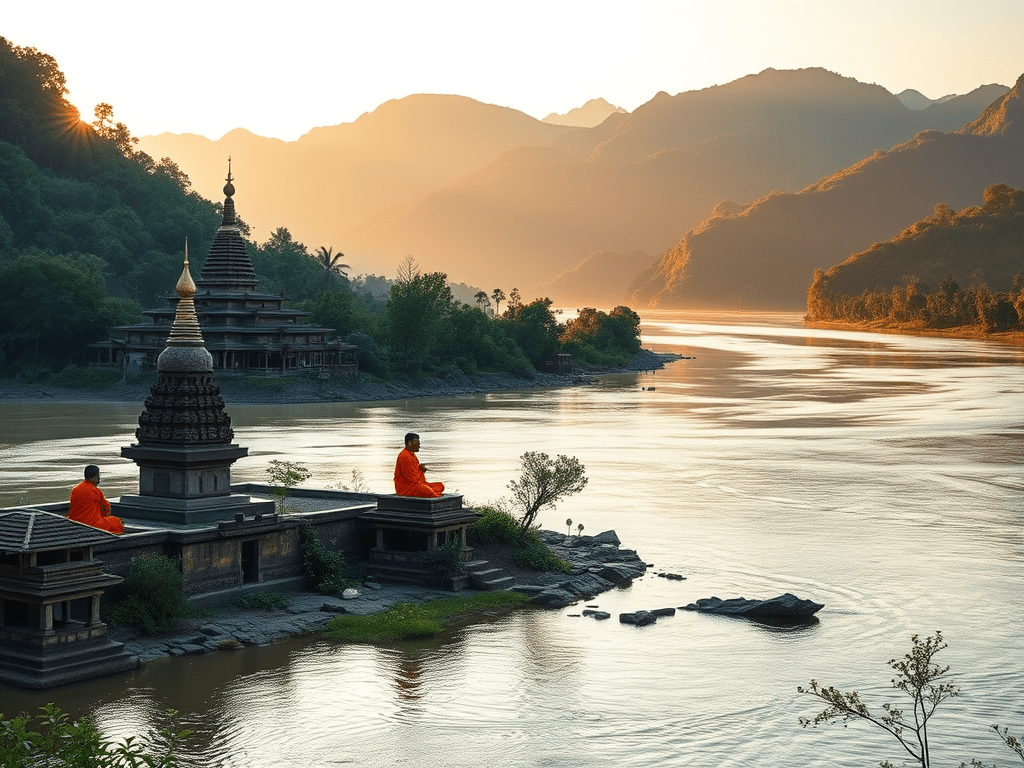
Welcome back, dear wanderers, to another inspiring edition of Wednesday Wanderlust! As your Head JTravel Curator at Voyage JTravels, I am thrilled—no, honored—to introduce you to a destination that travel industry insiders are calling THE must-visit location for 2026. This is not influencer hype or paid promotion. This is the collective wisdom of travel advisors, tour operators, and destination experts who have personally vetted this extraordinary country and declared it ready for discerning travelers seeking authentic, crowd-free, spiritually rich experiences.
Voyage JTravels
Today, we journey to Laos—the landlocked jewel of Southeast Asia that has remained beautifully under the radar while its neighbors (Thailand, Vietnam, Cambodia) attracted millions. Traversed by the mighty Mekong River, blessed with mountainous terrain draped in jungle, dotted with ancient Buddhist monasteries where saffron-robed monks still perform dawn rituals unchanged for centuries, and graced with French colonial architecture that whispers of a complex history, Laos offers something increasingly rare in our hyper-connected world: authenticity without performance, spirituality without commercialization, and natural beauty without crowds.vietnamplus+2
Travel experts describe Laos as offering “deeply spiritual and culturally rich experiences without the crowds elsewhere in the region,” particularly as quiet luxury hotels like Rosewood Luang Prabang elevate standards while maintaining the country’s essential calm pace and thoughtful approach to tourism. This is your moment to discover Laos before the rest of the world catches on—while it remains Southeast Asia’s best-kept secret.asianews+2
Why Laos? The Anti-Tourist Destination for Conscious Travelers 🌿
Laos operates on a different frequency than the rest of Southeast Asia. While Bangkok pulses with neon energy and Hanoi’s streets teem with scooters, Laos invites you to slow down, breathe deeply, and remember what travel felt like before Instagram dictated itineraries. The capital, Vientiane, remains one of Southeast Asia’s quietest capitals. Luang Prabang, despite UNESCO World Heritage status, retains an intimacy that makes you feel like a privileged guest rather than a tourist.vietnamplus+1
The country’s appeal lies precisely in what it does not have: mega-resorts that obliterate local culture, traffic jams that steal hours from your days, hawkers who hassle you relentlessly, or prices inflated to exploit foreign visitors. Instead, Laos offers village homestays where families welcome you genuinely, monks who smile as they pass on morning alms rounds, countryside so pristine you will see more water buffalo than cars, and a pace of life that feels like time travel to a gentler era.
Recent improvements in regional connectivity—better roads, new rail links, increased flights—have made Laos more accessible than ever, yet the country has resisted the trap of rapid, destructive tourism development. Government policies prioritize sustainable, community-focused tourism over mass-market exploitation. The result? A destination that rewards the curious, the respectful, and the patient with experiences that transform rather than merely entertain.tboacademy+1
For travelers weary of overdeveloped, over-Instagrammed, over-it-all destinations, Laos represents a revelation: proof that incredible beauty, profound culture, and warm hospitality can exist without being commodified beyond recognition.s3.amazonaws
Luang Prabang: Where Spirituality Flows Like the Mekong 🙏
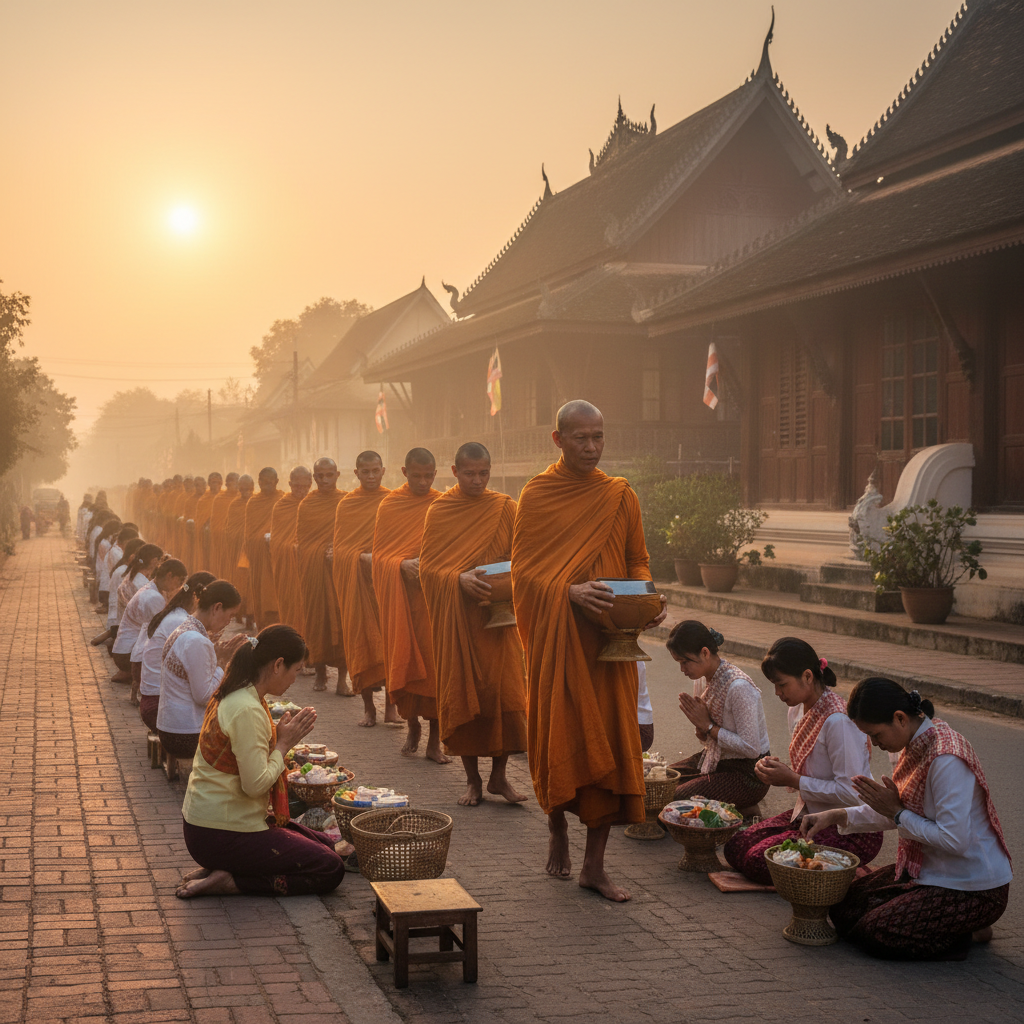
The sacred Alms Giving Ceremony at dawn in Luang Prabang where centuries-old Buddhist traditions continue daily
UNESCO recognized Luang Prabang as a World Heritage Site not just for its temples and colonial architecture, but for its living culture—a city where ancient Buddhist traditions continue to shape daily life rather than existing as museum pieces for tourists. Over 30 active Buddhist monasteries dot this riverside town, each maintaining centuries-old practices with remarkable devotion.nishiv
The Alms Giving Ceremony: Witnessing the Sacred
Every morning at dawn, as the first light touches the mountains surrounding Luang Prabang, one of the world’s most moving spiritual rituals unfolds. The Tak Bat—the alms giving ceremony—has been performed daily for over 500 years, and participating in it (respectfully) ranks among travel’s most profound experiences.nishiv+2
Beginning around 5:30 AM, Buddhist monks emerge from their monasteries dressed in brilliant saffron-orange robes that seem to glow in the early light. Walking barefoot in silent procession, they carry metal alms bowls, accepting offerings of sticky rice, fruit, and other foods from local residents and visitors who kneel in respect along the streets. The monks range from young novices—boys as young as eight—to elders who have dedicated lifetimes to dharma practice.thishumantribe+1
This is not performance. This is sacred exchange. By offering alms, people generate positive karma and merit that Buddhists believe improves this life and the next. By accepting alms, monks fulfill their role in the community while maintaining their vow of poverty, owning nothing and depending entirely on the generosity of laypeople.nishiv+1
Participating requires understanding and respecting specific protocols. You must dress modestly, covering shoulders and knees. Remove shoes and tuck feet beneath you when kneeling—showing the soles of feet is deeply disrespectful in Buddhist culture. Maintain complete silence throughout the ceremony. Women must keep their heads lower than the monks at all times. Do not touch the monks, make eye contact, or photograph their faces without permission. Do not participate if you view this as a photo opportunity rather than a spiritual practice.nishiv
Most hotels in Luang Prabang can arrange participation, providing appropriate seating, traditional dress, and food offerings for approximately $7.50 per person. They will brief you on proper etiquette and position you respectfully along the monks’ route. The experience—watching hundreds of monks file past in the amber dawn light, feeling the weight of centuries of tradition, participating in an act of generosity that connects you to something far larger than yourself—creates memories that resurface for years afterward.nishiv
This ritual encapsulates why Laos matters: here, spiritual practice is not revived for tourism but continues organically, and visitors are welcomed to participate if—and only if—they approach with genuine respect and humility.s3.amazonaws
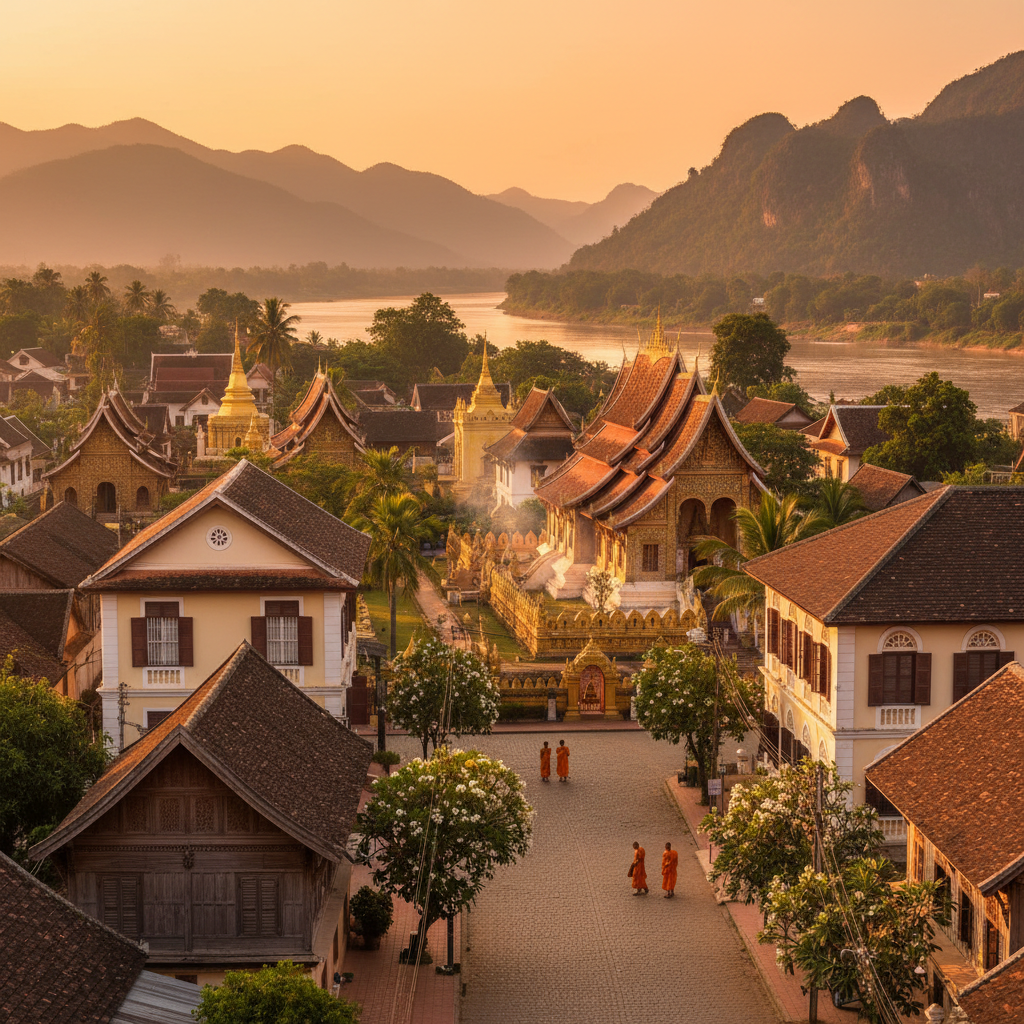
Luang Prabang’s golden temples and French colonial architecture glowing at sunset along the Mekong River
Vang Vieng: From Party Town to Nature Paradise 🏞️
Vang Vieng carries a complicated history. A decade ago, this town was infamous as Southeast Asia’s party capital, where drunk backpackers tubed down rivers between bars, and tragic accidents occurred with alarming frequency. The Lao government wisely intervened, shutting down the riverside bars and reimagining Vang Vieng as an adventure destination focused on its extraordinary natural assets.tatacheers
Today’s Vang Vieng showcases what happens when a community chooses sustainable development over quick tourist dollars. The party reputation lingers in some corners, but the town’s true identity has emerged: a basecamp for exploring one of Southeast Asia’s most dramatic landscapes.
The Karst Kingdom
Vang Vieng’s defining feature is its limestone karst topography—massive mountains that erupt vertically from flat plains like something from a fantasy novel. These aren’t gentle hills but sheer limestone cliffs rising hundreds of meters, their surfaces weathered into dramatic shapes, their bases riddled with caves formed over millennia by water dissolving rock. Dense jungle clings to impossible angles, and the karsts seem to roll endlessly into the distance, creating layers of mountains that fade into atmospheric blue.tatacheers+2
Rice paddies blanket the valley floor in geometric patterns, their brilliant green contrasting gorgeously with the gray stone and blue sky. Traditional wooden houses nestle among palm trees. Water buffalo graze peacefully. The Nam Song River winds through the landscape, reflecting the karsts and sky. Exploring by bicycle or motorbike along the red dirt paths that connect villages reveals countryside that feels untouched by the modern world.tatacheers
The Blue Lagoons: Natural Swimming Perfection
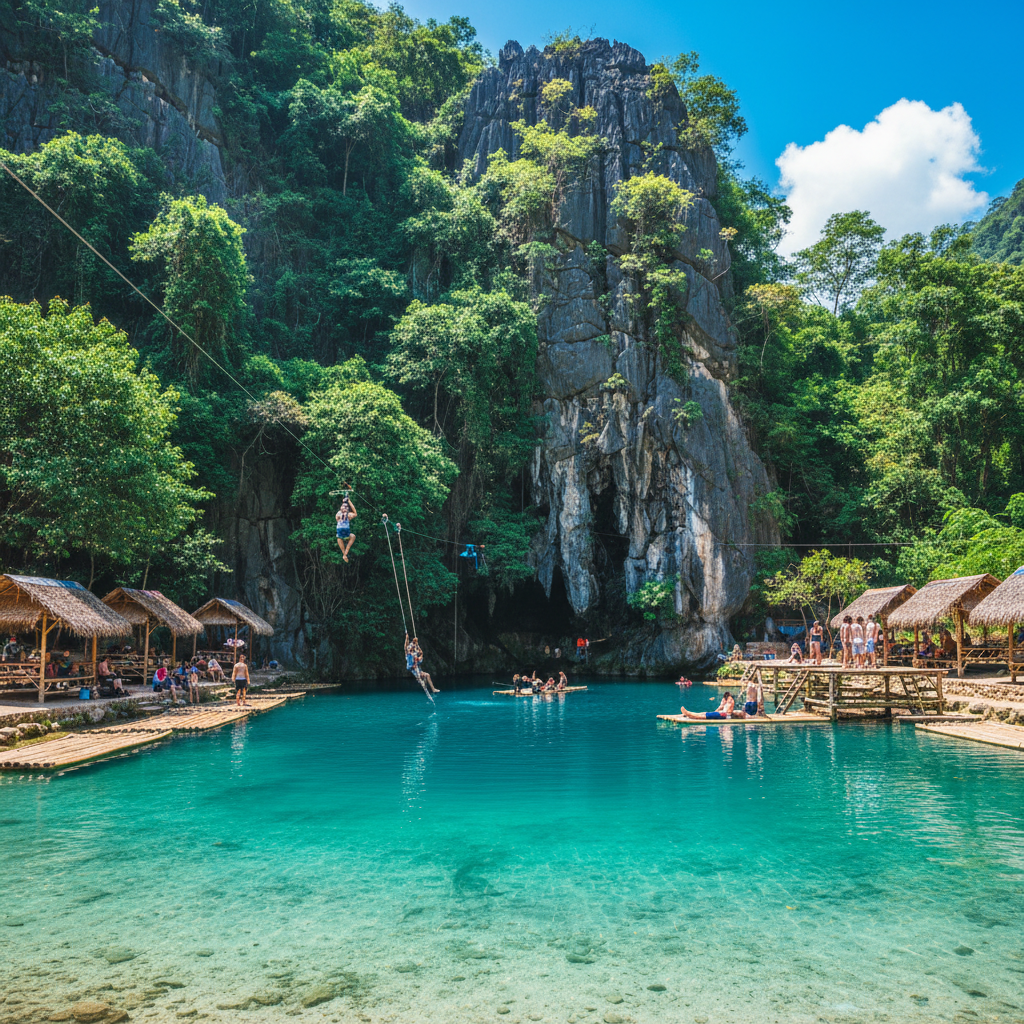
Blue Lagoon in Vang Vieng where turquoise waters meet dramatic limestone karsts creating natural paradise
Scattered around Vang Vieng at the feet of the karst mountains are natural spring-fed pools known as the Blue Lagoons—and they deliver exactly what their name promises. Currently, five lagoons are open to visitors, each requiring 20 minutes to an hour to reach along sometimes rough roads.tatacheers+2
The water achieves impossible shades of turquoise and sapphire blue—colors so saturated they seem Photoshopped until you stand before them in person. The lagoons range from huge rectangular pools to more intimate swimming holes, but all share crystal clarity that lets you see every detail of the sandy bottom, dramatic karst backdrops that provide stunning scenery, and a refreshing coolness that feels miraculous after hot tropical days.abfabtravels+2
Blue Lagoon 2 offers the most developed facilities: two large natural pools surrounded by thatched huts and benches where you can relax between swims. Its prime position keeps the sun all day, making it perfect for full-day visits.adventuresofjellie
Blue Lagoon 3, the furthest from town, has become the unofficial backpacker headquarters—a massive rectangular pool beneath a towering jungle-clad cliff where you will find rope swings, a flying fox zip line, a balance beam, jumping platforms of various heights, and bamboo rafts for lazy floating. The atmosphere here is social and energetic, with travelers from around the world bonding over shared adventures.tatacheers+2
Visiting the lagoons requires modest entrance fees (typically 10,000-15,000 kip, about $1-2), and most include changing facilities and simple restaurants. Bring swimwear, towels, sunscreen, and cash—cards are not accepted.abfabtravels+1s3.amazonaws
Sticky Rice and Laap: The Culinary Soul of Laos 🍚
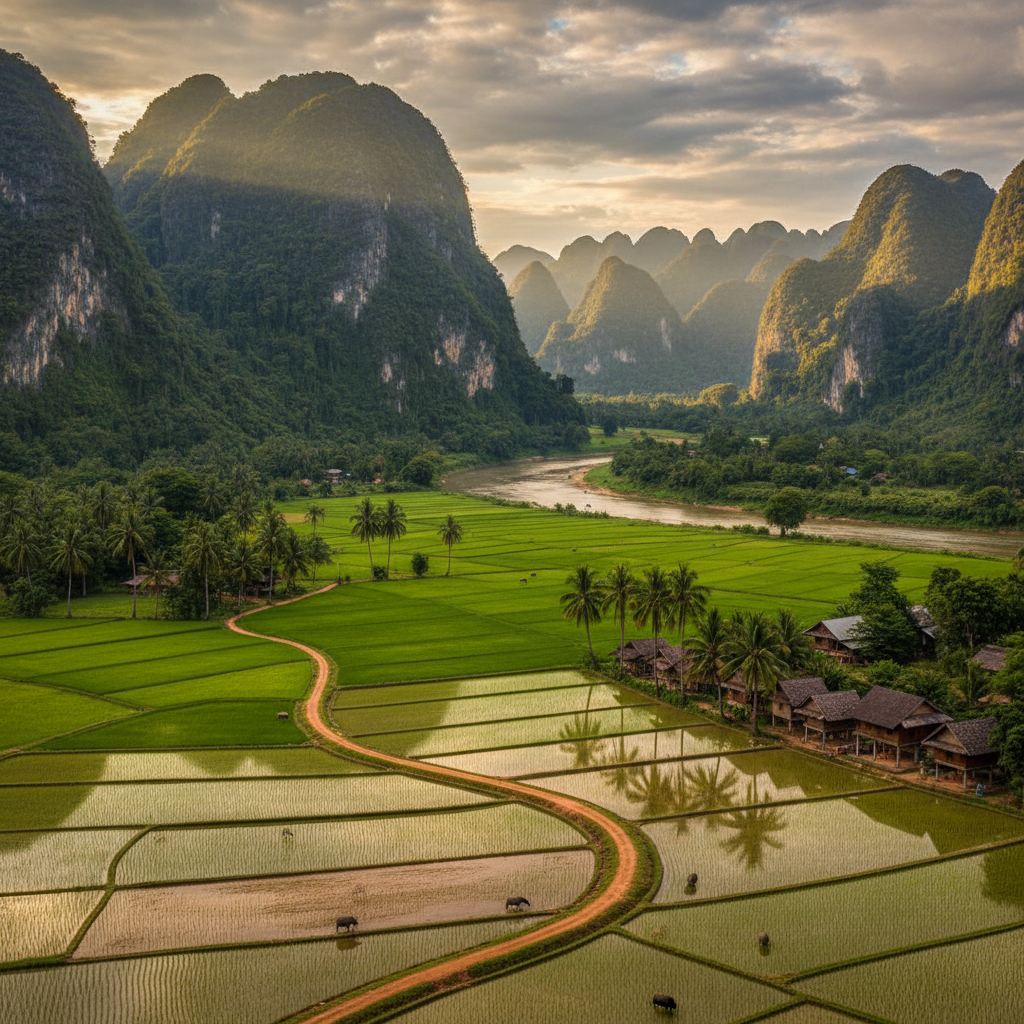
Vang Vieng’s iconic limestone karsts rising from emerald rice paddies creating Southeast Asia’s most stunning landscape
To understand Laos, you must understand its relationship with sticky rice. This is not hyperbole—it is demographic fact. Laos has the highest sticky rice consumption per capita in the entire world, with the average Laotian eating 171 kilograms (377 pounds) of sticky rice annually. For context, that is nearly half a kilogram—over a pound—every single day.wikipedia
Sticky rice is not merely food in Laos—it is identity. Affinity for sticky rice is considered “the essence of what it means to be Lao,” the cultural glue connecting Lao communities worldwide to their homeland. The Lao word for “to eat” literally translates as “to eat rice.” When Lao people ask “Have you eaten?” they are asking “Have you eaten rice?” Everything else is merely accompaniment.wikipedia
The Ritual of Sticky Rice
Sticky rice (khao niaw) is a different variety from regular rice and requires different preparation. It must be soaked overnight, then steamed the next morning in a distinctive cone-shaped bamboo basket called a huad. The steaming takes about 30 minutes, during which the rice transforms into glossy, translucent grains that clump together perfectly.explore-laos+1YouTube
Once cooked, sticky rice is transferred to a covered woven bamboo basket (tip khao) where it stays fresh all day without refrigeration. Lao people take these baskets everywhere—to rice paddies, offices, markets—ensuring sticky rice is always available whenever hunger strikes. If leftover rice remains the next day, it can be re-steamed for a few minutes to restore its texture and warmth.quakingblog.wordpress+1
Eating sticky rice is a tactile experience. You reach into the basket, pinch off a small amount, roll it between your fingers into a ball, then use it to scoop up meat, vegetables, or dips. The rice becomes edible utensil, flavor carrier, and satisfying sustenance simultaneously.exoticca+1
Laap: The National Dish
If sticky rice is Laos’ culinary foundation, laap (also spelled larb, larp, or laab) is its signature dish—the preparation that Lao people worldwide crave when homesick. This spicy minced meat salad achieves a remarkable balance of flavors: the tang of lime juice, the funk of fish sauce, the heat of chilies, the herbaceous brightness of mint and cilantro, and the nutty crunch of toasted ground rice.wikipedia+2
Laap can be made with chicken, pork, beef, duck, fish, or even offal. In some regions, particularly in northern Laos, laap is served raw—the meat “cooked” only by the acidity of lime juice, similar to Latin American ceviche. Today, most restaurants offer both raw and cooked versions, and vegetarian variations using mushrooms or tofu have become common.exoticca+1
Laap must—and I emphasize MUST—be paired with sticky rice. The rice tempers the heat, provides textural contrast to the meat, and turns a salad into a complete meal. Together with tam mak hung (green papaya salad), these three elements form the “trifecta of Laos’ national cuisine”.wikipedia
Beer Lao: The People’s Refreshment
No discussion of Lao food is complete without mentioning Beer Lao, the country’s beloved national beer brand. This lager, brewed since 1973, is widely considered the best-tasting beer in the region, and Lao people view it as an essential companion to any meal.explore-laos
Beer Lao is traditionally served ice-cold with a glass full of ice—a practice that horrifies beer purists but makes perfect sense in tropical heat. Sharing bottles of Beer Lao represents friendship, hospitality, and celebration. If invited to drink with Lao people, prepare to finish more bottles than initially expected—refusing refills can seem standoffish.explore-laoss3.amazonaws
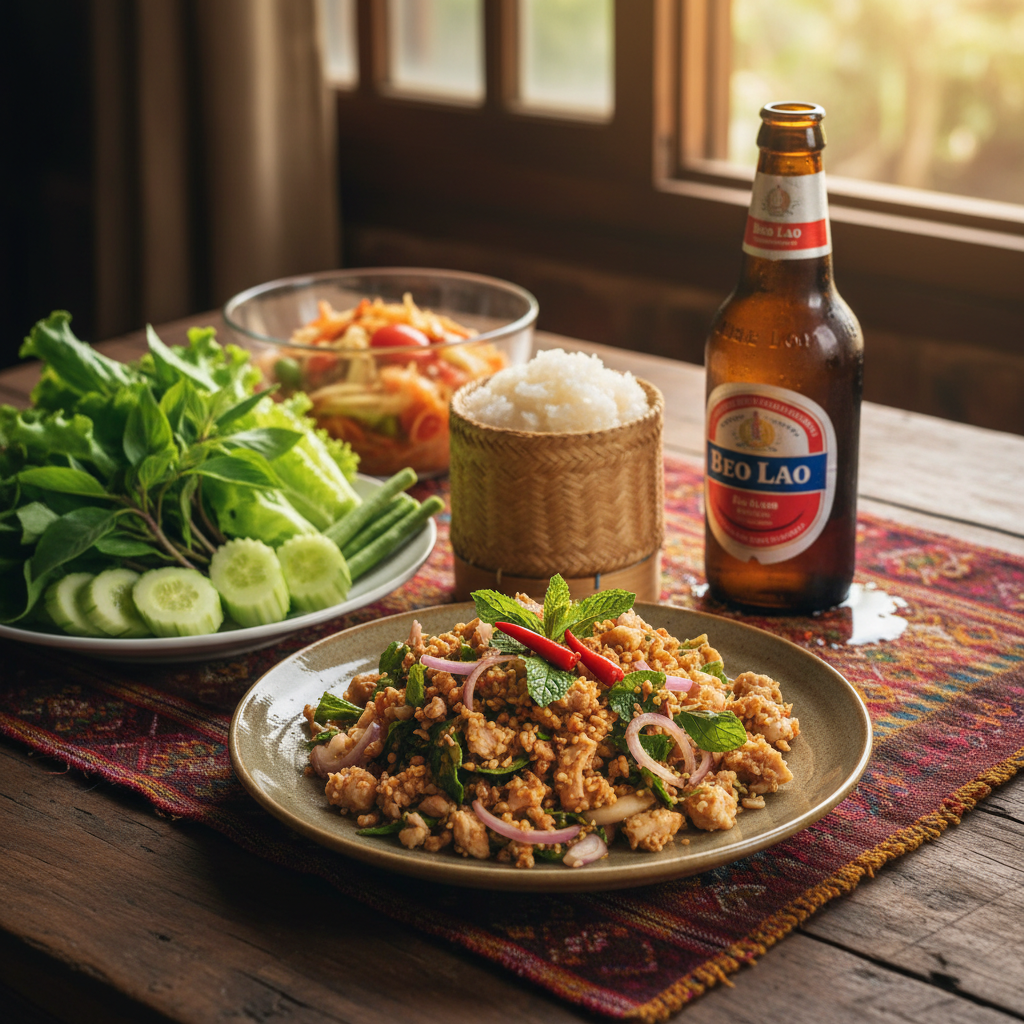
Laap and sticky rice—Laos’s beloved national dishes that define the country’s culinary soul and identity
Practical Essentials: Planning Your Lao Journey ✈️
Entry Requirements
United States citizens require a visa for stays in Laos, but obtaining one is straightforward. You have three options:legendtravelgroup+1
Visa on Arrival (VOA) is available at major international airports and land borders. Cost is $35-40 for a 30-day single-entry tourist visa. You will need your passport (valid for at least six months with two blank pages), one passport photo (4×6 cm), cash payment in USD, and ideally proof of onward travel. Processing takes 15-30 minutes upon arrival. Be prepared for overtime fees ($1) if arriving after hours.makeyourasia+1
E-Visa can be obtained online at laos-evisa.gov.la for $45-50. The process requires uploading your passport data page, a digital passport photo, entering your travel details and temporary Laos address (your first hotel), and paying online. Processing takes 3-5 business days, and you receive the visa by email to print and present upon arrival.apply.joinsherpa+2
Embassy Visa can be obtained from Laotian embassies in Washington D.C. or New York for $30-50, ideal for longer stays or special visa types.legendtravelgroup
All tourist visas are valid for 30 days and can be extended once for an additional 30 days at the Immigration Department in Vientiane for $2 per day.legendtravelgroup
Best Time to Visit
Laos operates on a relatively simple two-season system: dry (October-April) and wet (May-October), making travel planning straightforward.selectiveasia+2
Dry Season (October-April) represents optimal travel time, particularly November through February when temperatures are milder (around 23-29°C) and skies remain clear. March and April bring intense heat—temperatures often exceed 35°C (95°F)—and haze from agricultural burning can reduce visibility. However, if you can handle the heat, you will encounter fewer tourists and lower prices.wayfairertravel+4
Wet Season (May-October) sees frequent rainfall, particularly heavy in August and September. However, this season transforms the landscape into lush green paradise, waterfalls flow at maximum volume, and tourist crowds disappear almost entirely. Northern Laos, particularly Luang Prabang, often experiences rain at night or early morning with clear afternoons, making wet season travel more manageable than you might expect.extraordinaryjourneys+2
Regional variations matter: Luang Prabang stays cooler than southern destinations, with December-January temperatures dipping to 17°C at night—pack a warm layer. Vientiane is hottest between March and June. The Bolaven Plateau maintains pleasant temperatures year-round due to elevation.audleytravel+1
Getting Around
Transportation in Laos remains… adventurous. The country’s infrastructure has improved dramatically, but travel here requires patience, flexibility, and good humor.roughguides
Buses form the backbone of intercity transport. Route 13 runs the length of the country from Luang Prabang to the Cambodian border, with regular service between major cities. However, “regular” is relative—most buses depart between 8-9 AM, few leave after midday, and schedules serve as suggestions rather than guarantees. The Vang Vieng to Vientiane route benefits from a new expressway, making it relatively reliable at 1.5 hours.reddit+1
Government buses are cheaper but cramped with no air conditioning. Tourist minibuses and vans cost more and travel faster but can be just as crowded. For remote routes, expect aged vehicles prone to breakdowns, mountainous roads that slow progress to a crawl, and frequent stops to pick up passengers and goods.roughguides
Trains now connect some destinations. The new Vang Vieng to Vientiane service costs 204,000 kip (about $20) and is recommended over buses for comfort and reliability.reddit
Sawngthaews—converted pickup trucks with two facing benches in back—serve rural routes and short hops between towns and villages. They are cheap, authentic, and uncomfortable, but provide wonderful opportunities to interact with locals. You can charter sawngthaews for reasonable rates if you have a few travelers to split costs.roughguides
Tuk-tuks handle inner-city travel, charging approximately 5,000 kip per kilometer. Negotiate prices before departure.roughguides
For visiting remote sites, renting a car with driver often proves the only viable option. Self-drive rental exists only in Vientiane, and Lao driving conditions are challenging enough that hiring a driver makes sense for most visitors.roughguides
Insider Tips from Your JTravel Curator 💡
Participate in the alms ceremony respectfully or not at all. This is not a tourist show—it is active religious practice. If you cannot wake early, dress modestly, maintain silence, and approach with genuine reverence, observe from a respectful distance or skip it entirely. The monks and local people will appreciate your sensitivity.nishiv
Bring plenty of small-denomination kip. While larger hotels and restaurants in cities accept cards, most of Laos operates on cash. ATMs exist in cities but can be unreliable in smaller towns. Have 20,000, 10,000, and 5,000 kip notes for street food, tuk-tuks, and entrance fees.facebook
Pack for temperature variations. Even during hot season, northern mountains and evening temperatures can drop significantly. Bring layers including a light jacket, long pants, and closed-toe shoes for temple visits.selectiveasia+1
Allow extra time for transportation. Lao buses and boats operate on “Lao time”—they leave when full, not when scheduled. Build buffer days into your itinerary so delays become interesting interludes rather than stressful disruptions.roughguides
Learn basic Lao phrases. “Sabaidee” (hello), “Khop jai” (thank you), and “Baw pen nyang” (no problem/it’s okay) go a long way in showing respect and opening doors to genuine interactions.facebook
Try everything once. Sticky rice with your hands. Laap that is spicier than you prefer. Beer Lao with ice. These experiences connect you to Lao culture in ways guidebooks cannot describe.explore-laos+1
Download offline maps. Mobile data coverage improves yearly but remains spotty outside major centers. Google Maps works well in Laos and allows offline map downloads.facebook
Dress modestly, especially at temples. Cover shoulders and knees. Remove shoes before entering temple buildings. Women should not touch monks or hand items directly to them.facebook
Book Luang Prabang accommodations during peak season. November-February sees heavy demand for the limited quality hotels. Reserve at least 4-6 weeks ahead for this period.asianews+1
Your Lao Adventure Awaits – Let Voyage JTravels Create Perfection 🧳
As I write this, memories of my own Lao journeys flood back: the weight of sticky rice basket in my hands as kind grandmother showed me proper steaming technique, the tears that unexpectedly came during alms ceremony as I grasped the depth of centuries-old practice continuing despite modern world’s indifference, the laughter shared with fellow travelers floating in Blue Lagoon 3 beneath impossible karsts, the profound peace of watching sunset over Mekong from Luang Prabang temple steps while monks chanted evening prayers.
Laos has been named the top destination for 2026 by people whose job is knowing where travelers should go next—not influencers paid to promote wherever pays most, but travel advisors, tour operators, and industry insiders whose reputations depend on honest, informed recommendations. They have chosen Laos because it offers what travelers increasingly crave: authenticity, spiritual depth, natural beauty, warm hospitality, and the chance to visit before crowds transform it.tboacademy+3
This is your moment. Laos is accessible but not overrun, developed but not destroyed, ready but not resigned. In five years, quiet Luang Prabang may feel less intimate. In ten years, pristine countryside may show more development. These changes will benefit Lao people, and we should celebrate their rising prosperity. But they will also transform the traveler’s experience.
Now is your time.
Ready to Answer Laos’ Call?
At Voyage JTravels, I specialize in crafting Southeast Asian journeys that honor local culture while matching your interests, pace, and comfort preferences. Whether you envision a week exploring Luang Prabang’s spiritual treasures, a two-week adventure from Vientiane through Vang Vieng to the ancient plains of Xieng Khouang, or a month-long immersion into village life, Mekong river journeys, and mountain trekking, I will design an itinerary specifically for you.
My services include:
- Customized itinerary design based on detailed consultation
- Carefully selected accommodations from family guesthouses to quiet luxury lodges
- Reliable transportation arrangements navigating Laos’ challenging logistics
- Cultural preparation so you engage respectfully with Buddhist traditions
- Local guide connections who provide authentic insights beyond standard tours
- 24/7 support throughout your journey
- Insider access to experiences unavailable to independent travelers
Do not delay—let us create your unforgettable Lao adventure today! Please fill out the Travel Forms on our website and begin working with a JTravel Advisor. Together, we will design a journey that transforms your understanding of what travel can be when approached with openness, respect, and curiosity.
The Mekong is flowing. The monks are walking. Sticky rice is steaming.
Laos is calling.
Will you answer?
Like. Follow. Share. Subscribe. Book Now. Wander and Escape with Us …
#Laos #WednesdayWanderlust #LuangPrabang #VangVieng #AlmsCeremony #BlueL agoon #MekongRiver #BuddhistCulture #SoutheastAsia #VoyageJTravels #TravelAdvisor #AuthenticTravel #SpiritualJourney #CulturalTravel #HiddenGems #EmergingDestinations #SustainableTravel
Disclaimer: This travel blog post is intended for educational and informational purposes. While all information has been carefully researched using authoritative travel sources, government websites, and current travel data as of January 2026, travelers should verify entry requirements, visa policies, safety conditions, and practical details before booking travel. Information about destinations, prices, and conditions may change. The personal touches and recommendations reflect professional travel advisory guidance designed to enhance reader engagement and provide authentic travel planning assistance.




…Waiting to Hear Your Thoughts… Leave a Comment.