
Happy Tuesday, JTravelers!
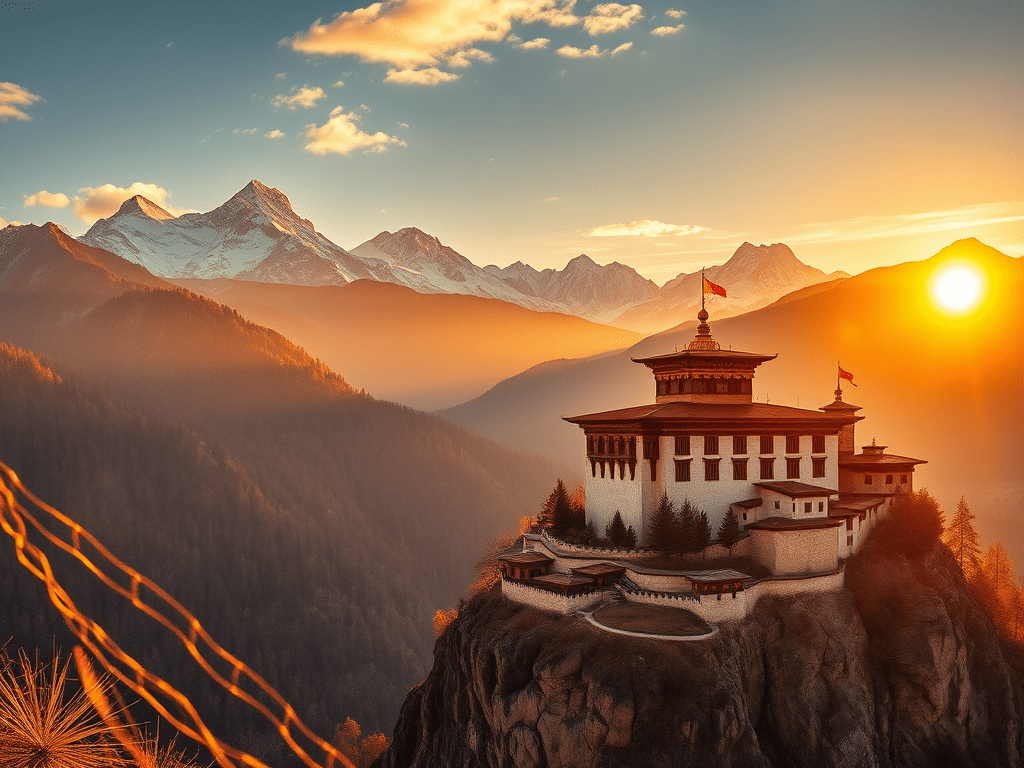
The midweek energy is coursing through us once again, and today, we’re embarking on a journey that transcends ordinary travel. Forget everything you think you know about bucket-list destinations. We’re venturing to a place where happiness is measured instead of money, where ancient monasteries cling to cliff faces at dizzying heights, where endangered cranes perform sacred dances in glacial valleys, and where every sunrise illuminates a kingdom committed to preserving what most of the world has already lost.
Welcome to Bhutan—the Last Himalayan Kingdom, where the philosophy of Gross National Happiness guides every decision, where 70% forest coverage isn’t an aspiration but constitutional law, and where authentic Buddhist culture thrives not as a museum exhibit but as a living, breathing way of life. This isn’t just another Asian destination to check off your list. Bhutan represents something profoundly different: a nation that chose happiness over wealth, sustainability over exploitation, and cultural preservation over modernization at any cost.
For luxury travelers who’ve grown weary of over-touristed destinations, who crave meaningful experiences over superficial ones, and who understand that true luxury means exclusivity paired with authenticity—Bhutan awaits. And here’s the beautiful paradox: the very policies that make Bhutan challenging to visit are precisely what makes it extraordinary to experience.
The Philosophy That Changes Everything: Gross National Happiness 🌟
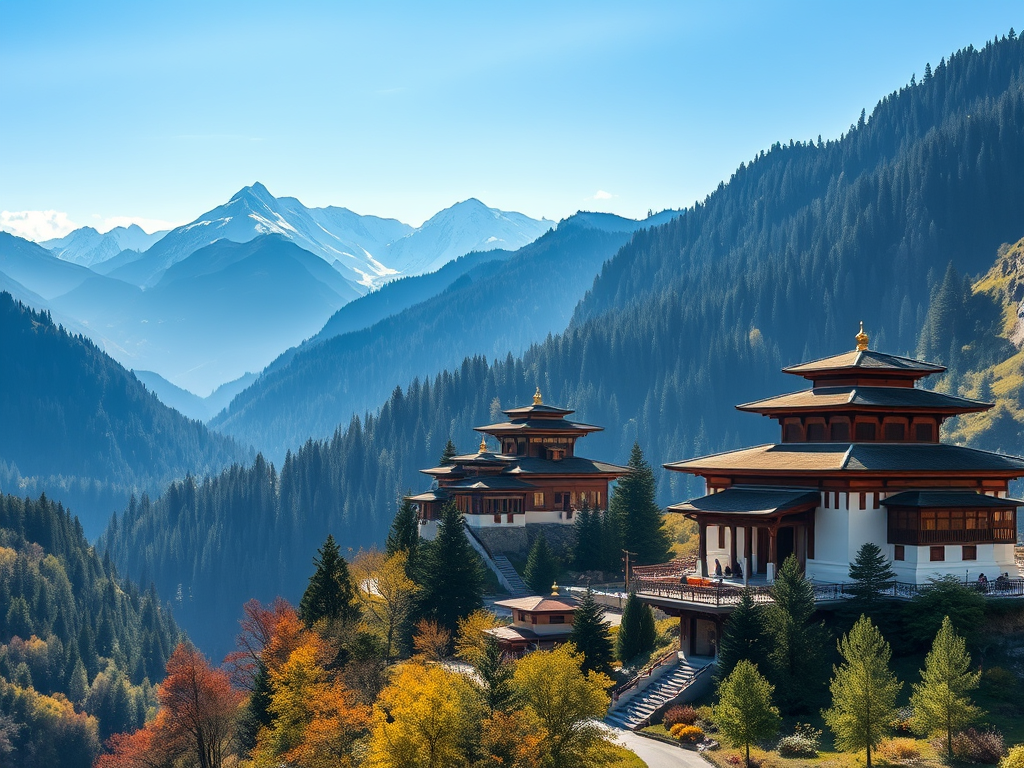
Before we explore the prayer flag-draped mountain passes and gold-spired dzongs that define Bhutan’s landscape, we must first understand the philosophy that shapes every aspect of Bhutanese life. In 1972, Bhutan’s Fourth King, Jigme Singye Wangchuck, proclaimed something revolutionary: “Gross National Happiness is more important than Gross Domestic Product.” This wasn’t political rhetoric—it became the foundation of national policy, eventually enshrined in Bhutan’s constitution in 2008.
While the rest of the world measures progress through economic indicators, Bhutan assesses its success through four sacred pillars: sustainable and equitable socio-economic development, preservation and promotion of culture, conservation of environment, and good governance. This holistic approach challenges everything we’ve been taught about development, suggesting that true progress must consider both material and spiritual well-being.
The impact? Bhutan remains carbon-negative—absorbing more CO2 than it produces—while providing free healthcare and education to all citizens. The constitution mandates that 60% of the country must remain forested forever (it’s currently over 70%). Traditional architecture is preserved not through historical societies but through building codes that require every structure to follow Bhutanese design principles. This isn’t preservation frozen in amber; it’s a living culture adapting thoughtfully to modernity while maintaining its essence.
And here’s the global ripple: Bhutan’s GNH philosophy inspired the United Nations to recognize happiness as a fundamental human goal, leading to the International Day of Happiness celebrated worldwide every March 20th. When a nation of just 760,000 people sandwiched between the giants of China and India can influence global thinking, you know something profound is happening.
Understanding Bhutan’s “High-Value, Low-Impact” Tourism Model 💎
Bhutan doesn’t want mass tourism. Let that sink in for a moment in our age of Instagram-driven travel hordes. The government has deliberately chosen a model called “High-Value, Low-Impact” tourism, designed to benefit the country while minimizing negative effects. This means controlled visitor numbers, mandatory sustainable development fees, and requirement to work with licensed tour operators.
Here’s what you need to know about entering this Himalayan sanctuary: Every visitor pays a Sustainable Development Fee (SDF) of $100 per person, per night (adults), plus a one-time $40 visa fee. Children aged 6-12 pay $50 per night, while children under six enter free. Starting January 2026, a 5% Goods and Services Tax will be added to costs.
Where does your SDF go? Directly into the very things that make Bhutan special: maintaining free healthcare and education for citizens, preserving ancient monasteries and cultural heritage sites, protecting endangered species like the black-necked crane and snow leopard, developing sustainable infrastructure, and keeping Bhutan carbon-negative. You’re not just paying a fee—you’re investing in one of Earth’s last intact Himalayan Buddhist cultures.
Critical clarification: The SDF does not cover your accommodation, meals, transportation, guides, or entry fees. Those are separate costs arranged through your licensed tour operator. For luxury travelers, expect daily costs of $500-2,000+ depending on your accommodation choices and itinerary complexity. Yes, Bhutan is expensive. But consider what you’re getting: exclusive access to one of the world’s most protected kingdoms, pristine landscapes free from overdevelopment, and authentic cultural encounters impossible to find elsewhere.
And here’s the luxury traveler’s secret: because Bhutan limits visitors and maintains such high standards, you’ll never encounter the crowds that plague Machu Picchu, Angkor Wat, or even the Maldives during peak season. Serenity isn’t sold separately here—it’s built into the national ethos.
Tiger’s Nest: The Icon That Defines the Impossible 🐯
No introduction to Bhutan is complete without Paro Taktsang—Tiger’s Nest Monastery—quite possibly the most dramatically situated sacred site on Earth. Perched precariously on a cliff face 900 meters above the Paro Valley at 3,120 meters elevation, this monastery complex appears to defy both gravity and rational construction methods. When you first glimpse it through mountain mists, clinging to sheer rock, you’ll understand why Bhutan feels like a land where legends manifest as reality.
The story behind Tiger’s Nest is equally spectacular. In the 8th century, Guru Rinpoche (Padmasambhava)—the revered master who brought Buddhism to Bhutan—flew to this cliff face from Tibet on the back of a tigress. Once here, he meditated in a cave for three years, three months, three days, and three hours to tame a local demon. The monastery was constructed around this sacred cave in 1692, and despite a devastating fire in 1998, it was meticulously rebuilt by 2005 to its former glory.
Visiting Tiger’s Nest requires commitment—a 4-5 hour round-trip hike covering 6.4 kilometers with significant elevation gain. The trail begins through blue pine forests, passes prayer flags fluttering in mountain winds, and climbs steadily to viewpoints where the monastery reveals itself in stages. At the midpoint sits a cafeteria with views so spectacular they compete with the food. The final approach requires descending into a gorge, crossing a waterfall-splashed bridge, then climbing stone steps to reach the monastery entrance.
Inside, gold-plated interiors shimmer with butter lamp light, and the Hall of Thousand Buddhas carved into living rock houses a large tiger statue—honoring the legendary creature that carried Guru Rinpoche to this improbable sanctuary. Monks still perform daily rituals here, rotating a massive prayer wheel at 4 AM to mark each new day. This isn’t a tourist attraction that happens to be sacred—it’s a living pilgrimage site that generously welcomes respectful visitors.
The best strategy? Begin your hike at sunrise when mists swirl through valleys and you’ll have the trail largely to yourself. The afternoon brings tour groups, but even then, Bhutan’s visitor limitations mean you’ll never experience the crushing crowds that plague famous sites elsewhere.
Phobjikha Valley: Where Cranes Dance and Time Slows 🕊️
While Tiger’s Nest captures Bhutan’s dramatic grandeur, Phobjikha Valley (also called Gangtey Valley) reveals its pastoral soul. This vast, glacial U-shaped valley in central Bhutan feels like stepping into a centuries-old painting where change happens at nature’s pace, not technology’s.
The valley’s guardian is the Gangtey Monastery, founded in 1613 by the Nyingma sect of Tibetan Buddhism. This ancient fortress-monastery sits on a forested hill overlooking the valley floor, its white walls and gold-tipped roofs creating a spiritual focal point for the scattered farmsteads below. But the valley’s most magical residents arrive from Tibet and China each October: black-necked cranes, one of the world’s most endangered bird species.
Here’s where legend and reality beautifully intertwine: when these graceful cranes arrive in the last week of October, they circle Gangtey Monastery exactly three times before descending to their winter feeding grounds in the marshlands below. When they depart for Tibet in spring, they repeat this ritual circumambulation—a behavior documented by ornithologists yet feeling impossibly spiritual. Locals believe the cranes pay respect to the monastery, while scientists note that such behavior patterns in migratory birds remain poorly understood.
The valley’s 970-hectare core has been designated a Ramsar wetland site of international importance, protecting not only the cranes but 13 other globally threatened species. The Royal Society for the Protection of Nature manages conservation efforts, and the annual Black-Necked Crane Festival held each November in Gangtey Monastery’s courtyard celebrates these magnificent birds with traditional masked dances, school children performing crane-inspired songs, and educational programs about conservation.
For travelers, Phobjikha offers profound serenity. The Gangtey Nature Trail—a moderate 4-kilometer hike through forest and farmland—provides intimate valley perspectives. Staying at luxury properties like Gangtey Lodge (which earned a Michelin Key in 2025) means waking to views of mist-covered fields where time seems suspended, where yak herders follow ancient rhythms, and where the only sounds are wind through prayer flags and the occasional call of cranes.
The Luxury Lodges That Redefine Himalayan Hospitality 🏔️
Bhutan’s accommodation scene has been revolutionized by three international luxury brands that have created properties so exceptional they’ve earned Michelin Keys—the hospitality world’s highest accolade introduced in 2025. These aren’t just hotels; they’re gateways to understanding Bhutan’s essence.
Amankora (Two Michelin Keys)
Aman’s Bhutanese expression, Amankora (“peaceful pilgrimage”), consists of five intimate lodges scattered across Paro, Thimphu, Punakha, Gangtey, and Bumthang—just 72 rooms total. Designed by renowned architect Kerry Hill, each lodge interprets Bhutan’s mandatory traditional architecture through minimalist Japanese aesthetics. Imagine rammed earth walls that seem to grow from forest floors, open-plan suites where soaking tubs face pine forests, and the deliberate absence of televisions allowing your attention to remain on the extraordinary landscape surrounding you.
The Amankora experience is about circuit journeys—moving between lodges to experience different valleys while your luggage is transferred ahead. In Paro, you’re positioned perfectly for Tiger’s Nest. In Gangtey, floor-to-ceiling windows frame Gangtey Monastery and crane-filled wetlands. In Punakha (the only lodge with a pool currently), subtropical warmth contrasts with alpine properties. Each features spa treatments, reading rooms stocked with Buddhist texts and travel literature, communal areas perfect for afternoon tea, and dining that showcases Bhutanese ingredients through elevated preparations.
Six Senses Bhutan (Three Michelin Keys)
If Amankora whispers, Six Senses Bhutan sings operatically. Also featuring five lodges, Six Senses leans fully into traditional Bhutanese architecture executed at luxury’s highest levels. The Thimphu property, dubbed the “Palace in the Sky,” showcases floor-to-ceiling windows overlooking reflection ponds and city lights, every inch meticulously crafted with Bhutanese decorative elements—hand-painted motifs, carved woodwork, and tapestries that could hang in museums.
Each lodge features Prayer Pavilions where morning yoga or meditation sessions frame spiritual practice within authentic settings. The design doesn’t just respect Bhutanese aesthetics—it celebrates them lavishly while incorporating every modern luxury amenity discerning travelers expect. This is Bhutan’s most expensive option, with rates reflecting the extraordinary attention to detail and service that earned it three Michelin Keys (more than Amankora’s two).
COMO Uma Bhutan
For travelers seeking luxury without the $2,000+ nightly rates of Aman or Six Senses, COMO Uma provides elegant mid-luxury properties in Paro and Punakha. With rates historically around $500-800 per night (pre-2023 SDF increases), COMO offers sophisticated comfort, excellent service, and well-designed spaces—though guests who’ve experienced Aman or Six Senses note the comparative difference. COMO remains a solid choice for those prioritizing budget flexibility while maintaining high standards.
The takeaway? Bhutan’s luxury accommodation scene offers options from extraordinarily opulent to comfortably elegant, but every property must follow traditional architectural guidelines. You won’t find glass skyscrapers or modernist cubes here—just exquisitely crafted lodges that honor Bhutanese building traditions while delivering world-class hospitality.
Adventures That Humble and Transform ⛰️
For active travelers, Bhutan’s trekking opportunities range from moderate valley walks to one of Earth’s most challenging expeditions—the legendary Snowman Trek.
The Snowman Trek: World’s Most Difficult
Billed as the most challenging trek globally due to altitude, duration, and remoteness, the Snowman Trek takes 25+ days through northern Bhutan along the Tibetan border, crossing thirteen Himalayan passes—some exceeding 5,000 meters elevation. More people have summited Mount Everest than completed this alpine odyssey. The trek reveals landscapes so pristine, so untouched, that you’ll feel like the first human to witness snow-capped peaks reflecting in glacial lakes, where encounters with blue sheep and Himalayan takins (Bhutan’s national animal) outnumber human interactions.
The route passes through Lunana region—one of Earth’s most remote inhabited areas—where yak herders maintain lifestyles unchanged for centuries. Nights are spent camping at elevations where breath comes thin and star fields appear impossibly dense. This trek isn’t for casual hikers; it demands serious physical conditioning, high-altitude experience, and mental fortitude. But for those who complete it, the Snowman Trek becomes a defining life experience—proof that some achievements require suffering as the price of transcendence.
The Druk Path Trek: Classic Bhutan
For most travelers, the Druk Path Trek provides the perfect introduction to Bhutanese trekking. This moderate 4-6 day journey connects Paro and Thimphu along an ancient route through pristine wilderness. You’ll hike through blue pine forests and dwarf rhododendron thickets, climb to high ridges offering panoramic Himalayan views, and camp beside sacred alpine lakes—Jimilang Tsho and Simkotra Tsho—where mountain reflections create mirror images so perfect they disorient the eye.
The trek provides spectacular vantage points of Jomolhari and Gangkar Puensum—the world’s highest unclimbed mountain at 7,570 meters (Bhutan prohibits mountaineering out of respect for sacred peaks). Each evening, your trekking team—guides, cooks, horsemen, and yak wranglers—sets up comfortable camps where you’ll enjoy hot meals after carrying only a daypack while support staff transports all gear. This is trekking with logistics handled, allowing you to focus entirely on the transformative landscape.
Festivals Where Gods Dance and Communities Celebrate 🎭
Timing your Bhutan journey to coincide with a tshechu (religious festival) elevates the experience from exceptional to unforgettable. These vibrant celebrations honoring Guru Rinpoche feature masked dances (cham) performed by monks and laypeople wearing elaborate silk and brocade costumes, often with carved wooden masks representing deities, animals, and protective spirits.
The Paro Tshechu draws enormous spring crowds to spacious monastery courtyards where dancers move to the hypnotic rhythm of drums and cymbals, reenacting important Buddhist teachings and legends. The Thimphu Tshechu, held inside the capital’s fortress in fall, offers equally spectacular performances in more cramped quarters—arrive early for good viewing positions. What makes these festivals profoundly meaningful isn’t just the spectacle but the authentic participation of Bhutanese families dressed in finest national clothing, traveling from remote villages to earn blessings, socialize with friends, and celebrate their living cultural heritage.
The Black-Necked Crane Festival each November in Phobjikha Valley uniquely blends conservation awareness with cultural celebration. School children perform songs and plays about protecting endangered cranes, traditional masked dances honor the birds’ spiritual significance, and park rangers provide education about ongoing preservation efforts—all in Gangtey Monastery’s courtyard with the backdrop of cranes feeding in wetlands below.
Tasting Bhutan: Ema Datshi and Beyond 🌶️
Bhutanese cuisine centers on ema datshi—the beloved national dish literally meaning “chili cheese.” This isn’t subtle food. Fresh or dried chilies (sha ema cultivars similar to cayenne or anaheim) are simmered until tender, then swimming in melted datshi cheese made from cow or yak milk. The result? A spicy, rich stew that Bhutanese eat daily, often straight from the serving dish, though visitors typically ladle it over Bhutanese red rice or buckwheat noodles.
Be warned: Bhutanese consider chilies a vegetable, not merely seasoning. If you’re unaccustomed to serious heat, request milder versions. Beyond ema datshi, you’ll encounter momos (dumplings), butter tea, and various datshi variations incorporating mushrooms, potatoes, or other vegetables. The food reflects Tibetan culinary roots adapted to local ingredients and tastes—hearty, warming fare perfect for mountain climates.
Punakha’s Majestic Dzong and Subtropical Grace 🏰
While Paro and Thimphu claim fame, Punakha offers something uniquely enchanting. The Punakha Dzong—”Palace of Great Happiness”—constructed in 1637 as Bhutan’s second fortress-monastery, sits at the dramatic confluence of the Mo Chhu and Pho Chhu rivers. Its towering white walls contrast brilliantly with surrounding greens and blues, and the dzong holds sacred relics over which wars with Tibet were fought.
Punakha Valley’s subtropical climate creates lush rice paddies, guava groves, and warmth that contrasts with higher-altitude valleys. The famous suspension bridge crossing the Mo Chhu sways gently as you walk above turquoise water, prayer flags strung along its length. Luxury lodges here, including Amankora Punakha (the only Aman with a pool) and COMO Uma Punakha, offer dreamy hillside positions overlooking the valley—perfect bases for white-water rafting, valley hikes, and simply absorbing Punakha’s languid pace.
Why Bhutan Demands Your JTravel Curator ✨
Planning Bhutan independently is impossible—regulations require working with licensed tour operators. But here’s why choosing Voyage JTravels transforms your Bhutan experience from simply visiting to genuinely understanding this sacred kingdom:
I recently curated a Bhutan journey for clients Michael and Jennifer, successful healthcare executives from Chicago celebrating their 25th anniversary. They’d traveled extensively—Patagonia, Tanzania, Tuscany—but felt hollow after their last trip to an over-touristed Bali where authenticity had been commercialized into performance. They craved meaning, not just beauty; transformation, not just relaxation.
We designed a 12-day circuit moving between Amankora lodges, timing their visit to coincide with the Black-Necked Crane Festival in Phobjikha Valley. I arranged a private audience with a senior monk at Gangtey Monastery who spent two hours discussing Buddhist philosophy and answering their genuine questions about happiness, attachment, and purpose. Their Tiger’s Nest hike began before dawn with a guide who had grown up in Paro, sharing childhood memories of festivals and family traditions as they climbed through mist-shrouded forests.
In Punakha, instead of standard dzong tours, I connected them with a master thangka painter who welcomed them into his studio, explaining the spiritual significance behind every brushstroke while teaching Jennifer to grind natural pigments—lapis lazuli for blue, malachite for green—used in sacred Buddhist art. Michael, meanwhile, participated in an archery session with villagers (archery is Bhutan’s national sport), where language barriers dissolved into laughter and competition.
The transformation I witnessed when they returned? Jennifer described it as “remembering what travel used to feel like before everything became an Instagram opportunity.” Michael said simply, “I didn’t know places like this still existed.” Their Bhutan journey wasn’t about collecting experiences—it was about slowing down enough to be changed by what they encountered.
That’s what expert curation provides: access beyond itineraries, connections deeper than tours, and the confidence that every logistical detail—permits, SDF payments, guide quality, accommodation positioning, festival timing—has been handled by someone who understands that true luxury isn’t thread count but transformative moments you couldn’t orchestrate yourself.
Your Bhutanese Awakening Awaits 🙏
In a world where travel has become democratized to the point of degradation, where Instagram algorithms dictate destination choices, and where “authentic experiences” are staged performances—Bhutan stands apart. This isn’t a country trying to maximize tourist dollars. It’s a kingdom that chose happiness over wealth, sustainability over exploitation, and cultural preservation over modernization’s empty promises.
Yes, Bhutan is expensive. Yes, it requires working with tour operators. Yes, it demands more planning and investment than flying to Cancún for cocktails on a resort beach. But if you’ve reached the point in your travel life where you’re seeking substance over superficiality, where you understand that exclusivity paired with authenticity represents true luxury, and where you’re ready for a destination that gives back more than you could ever take—Bhutan is calling.
The Kingdom of the Thunder Dragon doesn’t need your tourist dollars. But it welcomes travelers who approach with respect, curiosity, and the humility to recognize that some cultures have figured out what truly matters—and might teach us something profound if we’re willing to listen.
Your JTravel Curator at Voyage JTravels stands ready to craft your Bhutanese awakening. Whether you’re celebrating a milestone anniversary like Michael and Jennifer, seeking solo adventure and spiritual reflection, planning a multi-generational family journey, or designing a transformative honeymoon—we’ll create an itinerary that honors both Bhutan’s sacred character and your personal journey.
Because some destinations don’t just change your Instagram feed—they change your soul. Bhutan is one of them.
Like. Follow. Share. Subscribe. Book Now. Wander and Escape with Us…
#BhutanTravel #GrossNationalHappiness #TigersNest #HimalayanKingdom #LuxuryTravel #SustainableTravel #VoyageJTravels #BuddhistCulture #TransformativeTravel #MindfulTravel #LastShangriLa #BhutanTrek #AuthenticTravel #CulturalImmersion
Book Now. Please Fill Out the Travel Forms and Begin Working with a JTravel Curator Today! Learn More at Voyage JTravels
Disclaimer: Please note that this travel blog post is intended for educational and informational purposes. While based on extensive research and aiming for accuracy, some anecdotal elements and personal touches have been included for storytelling and illustrative purposes to enhance reader engagement. Prices, fees, availability, and conditions may vary. Always confirm current details directly with licensed Bhutanese tour operators and consult the official Bhutan Tourism website before making travel plans. Travel requirements and policies are subject to change.



…Waiting to Hear Your Thoughts… Leave a Comment.