

Tuesday invites intrepid travelers to venture beyond conventional destinations and embrace the world’s most audacious frontier, Greenland. This Arctic masterpiece represents far more than geographic isolation; it embodies a transformative philosophy where extreme remoteness catalyzes profound digital detox, sustainable eco-tourism intersects with ancient Inuit wisdom, and adventure-seeking professionals discover that working from the edge of the world provides clarity impossible in crowded coworking cafés. For the remote marketing consultant balancing career ambitions with authentic cultural immersion, Greenland’s November landscape, painted with early northern lights, dramatic ice formations, and intimate community connections, creates the ultimate sanctuary where productivity flourishes through inspiration rather than caffeine dependency. This comprehensive guide curates an extraordinary Arctic escape designed specifically for digitally-savvy, eco-conscious travelers who refuse to compromise adventure for Wi-Fi reliability.
Voyage JTravels
November’s Arctic Canvas: Why This Shoulder Season Transforms Greenland into Digital Nomad Paradise 🌌🦌
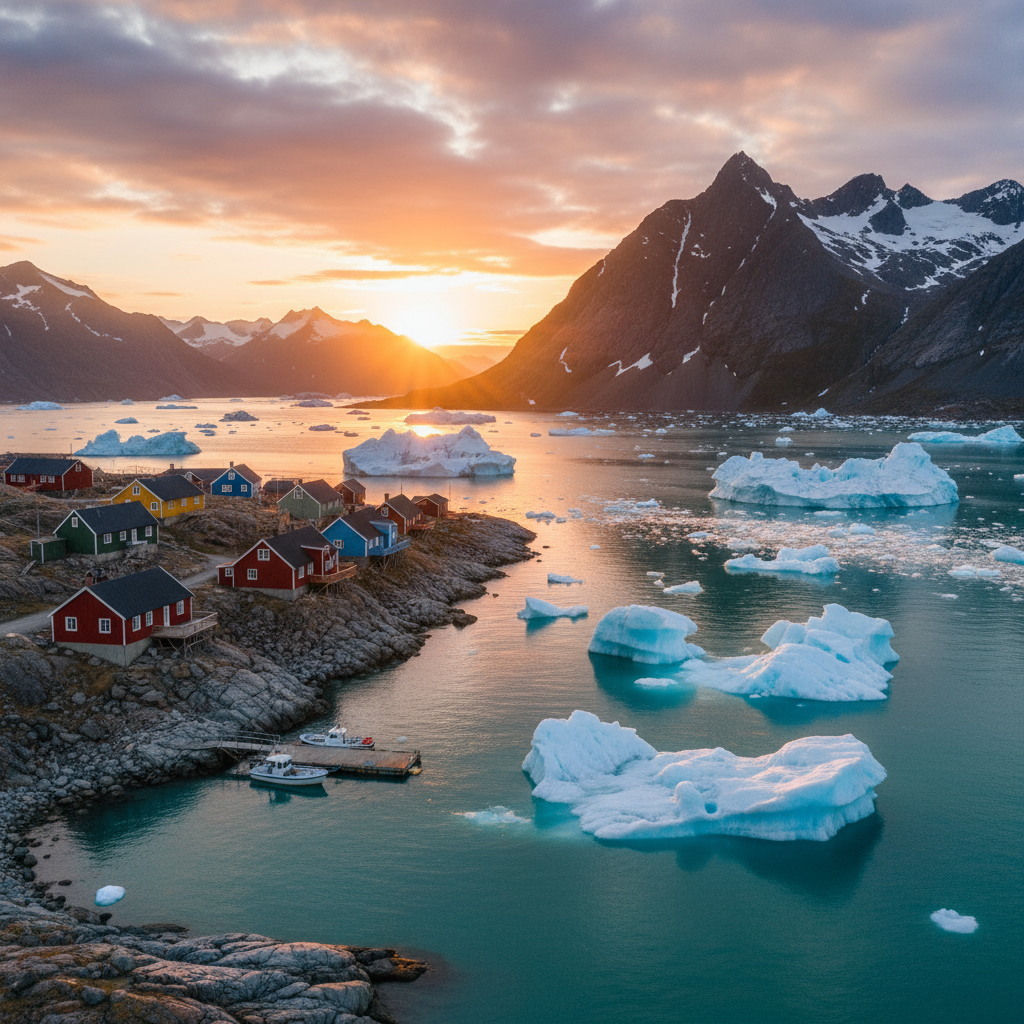
Traditional Greenlandic homes nestled along an iceberg-filled fjord at sunset
November positions Greenland at a magical threshold—the transition from autumn’s golden light into winter’s pristine darkness creates extraordinary opportunities for witnessing the aurora borealis while maintaining reasonable temperatures averaging -5°C to -15°C (23°F to 5°F) depending on region. Unlike summer’s midnight sun tourism crush, November’s quieter rhythm allows genuine connections with local Inuit communities who welcome visitors into their homes for traditional kaffemik coffee celebrations—intimate cultural exchanges impossible during peak season.fiftydegreesnorth+2
This transitional month brings profound advantages for remote professionals seeking authentic work-life integration in inspiring landscapes. The darkness gradually extends, creating optimal conditions for northern lights viewing from late afternoon through evening, while still maintaining sufficient daylight (4-6 hours) for outdoor exploration and photography. Temperatures remain manageable with proper layering—far warmer than Greenland’s brutal December-March winter when thermometers plunge below -20°C and outdoor activities become significantly more challenging.oattravel+1
November marks the beginning of whale watching season’s tail end, with opportunities still available to spot humpback, minke, and bowhead whales along southern coasts through early November. The landscape explodes with autumn colors—brilliant reds, yellows, and greens painting tundra vegetation before winter’s white blanket arrives. Local hunters actively prepare for winter, creating authentic opportunities to witness traditional subsistence practices that have sustained Inuit communities for over 4,000 years.eastgreenland+2
For Instagram-savvy travelers, November delivers dramatic photography opportunities unmatched by other seasons—icebergs illuminated by low-angle sunlight, northern lights dancing across Arctic skies, and snow-dusted mountains creating ethereal backdrops for content that genuinely resonates with audiences fatigued by overexposed tropical beaches. The reduced tourist presence means your captures feel authentic rather than staged, your experiences genuine rather than transactional.sydneytoanywhere+1
Remote Work Revolution: Arctic Infrastructure Meets Digital Connectivity 💻🛰️
Greenland shatters stereotypes about Arctic isolation through surprisingly robust digital infrastructure, particularly in major hubs like Nuuk (population 17,000), Ilulissat, and Kangerlussuaq. The capital Nuuk offers reliable high-speed internet through fiber-optic networks and 4G/5G coverage across the city, supporting video conferencing, cloud-based work, and seamless client communication. Hotels, cafés, and coworking spaces provide dedicated workspaces designed specifically for remote professionals who increasingly recognize Greenland as a legitimate digital nomad destination.icelandholidaypackages+2
Arctic Digital Nomads program—connecting remote workers with coworking communities across Iceland, Norway, Faroe Islands, and Greenland—has legitimized the Arctic as viable workspace, offering grants covering accommodation and office space for 1-3 months. While November’s grant applications may close annually in autumn, the infrastructure these programs establish remains accessible year-round for independent travelers willing to self-fund Arctic adventures. Geirangerfjord (Norway), Westfjords (Iceland), and Vágur (Faroe Islands) represent parallel Arctic destinations with established coworking ecosystems, proving remote work thrives in extreme northern latitudes.arcticdigitalnomads+1
Greenland’s unique appeal for November remote work stems from profound environmental inspiration—imagine conducting morning strategy sessions overlooking ice-choked fjords, taking lunch breaks photographing icebergs, and ending workdays with northern lights displays that reinvigorate creative thinking. The extreme environment naturally enforces boundaries between work and exploration; when temperatures drop and darkness arrives, outdoor activities become scheduled rather than spontaneous, creating productive work blocks impossible in perpetually-sunny beach destinations where distractions multiply exponentially.fiftydegreesnorth+1
Practical considerations demand acknowledgment: Greenland’s remoteness means higher costs for accommodation (€100-200+ nightly for hotels), limited restaurant diversity outside major towns, and weather-dependent transportation that can disrupt travel plans. However, for professionals seeking deep-focus work sprints combined with transformative personal experiences, these challenges become features rather than bugs—the isolation forces presence, the costs ensure commitment, and the weather unpredictability teaches adaptability valuable in both professional and personal contexts.adventure-life+3
Sustainability Leadership: Greenland’s Eco-Tourism Revolution Redefines Responsible Travel 🌿♻️
Greenland represents global leadership in regenerative tourism that prioritizes environmental preservation and indigenous community support over extractive mass tourism. The territory’s vast wilderness—80% covered by permanent ice sheet—remains largely untouched by human development, creating tourism models inherently sustainable due to access limitations rather than regulatory enforcement. This natural constraint means every visitor automatically participates in low-impact travel simply by choosing Greenland as destination.fiftydegreesnorth+2
Eco-lodges and wilderness camps throughout Greenland exemplify sustainable hospitality without compromising comfort. Camp Kiattua near Nuuk operates exclusively during summer-autumn months, offering luxury tented accommodations accessible only by boat or helicopter, ensuring minimal permanent environmental footprint. The camp’s remote location—two hours by boat from Nuuk—creates automobile-free environments where guests paddle kayaks among icebergs, hike pristine mountain trails, and swim in Arctic waters without industrialized tourism infrastructure marring landscapes.adventure-life+1
Ilulissat and Eqi Glacier eco-lodges combine environmental responsibility with cultural authenticity—accommodations feature traditional Greenlandic design principles adapted for modern comfort, meals showcase locally-sourced ingredients from Arctic waters and tundra vegetation, and activities prioritize non-motorized exploration (kayaking, hiking, dog sledding) over fuel-intensive options. These properties employ local Inuit staff who share traditional knowledge, storytelling, and cultural practices, ensuring tourism revenue directly benefits indigenous communities rather than foreign corporations.icelandholidaypackages+3
The Inuit hunting and fishing traditions that supply Greenland’s cuisine represent perhaps the world’s oldest sustainable food system—4,000+ years of harvesting Arctic wildlife without species collapse demonstrates profound environmental wisdom. Modern quotas and licensing ensure hunting practices remain balanced with ecosystem health, while traditional methods (kayaking, dog sledding, hand fishing) minimize fossil fuel consumption compared to industrial fishing operations. Choosing traditional Greenlandic cuisine over imported foods becomes environmental activism—supporting local subsistence economies reduces carbon footprint from international shipping while honoring indigenous food sovereignty.eastgreenland+3
Climate change impacts demand acknowledgment: Greenland experiences accelerated warming affecting ice sheet stability, wildlife migration patterns, and traditional hunting grounds. Visiting Greenland as climate-conscious traveler means witnessing climate impacts firsthand while supporting communities most affected by environmental changes they didn’t cause. Voyage JTravels ensures comprehensive travel insurance protects Arctic adventures while financing options make sustainable travel accessible rather than exclusive luxury reserved for wealthy elites.oattravel+5
Adventure Redefined: November’s Arctic Expeditions Balance Thrill with Accessibility 🚣♀️🐻
Greenland’s November adventure landscape strikes extraordinary balance between accessible exploration and genuine wilderness challenge. Kayaking among icebergs in Disko Bay near Ilulissat remains possible into November with appropriate cold-water gear and experienced guides. The experience of paddling silently through ice-choked waters, watching massive icebergs calve from glaciers, and feeling Arctic wind against your face creates profound connection with Earth’s elemental power impossible to replicate elsewhere.fiftydegreesnorth+3
Dog sledding preparation activities begin in November as mushers train teams for winter season—visitors can participate in husky feeding, learn traditional sled-building techniques, and understand the profound relationship between Inuit communities and working dogs that have enabled Arctic survival for millennia. While full dog sledding expeditions require deeper winter snow, November offers intimate behind-the-scenes access unavailable during peak tourist season when demand outstrips capacity.oattravel+1
Hiking to the Greenland Ice Sheet from Kangerlussuaq provides perhaps the territory’s most accessible yet profound wilderness experience. The ice sheet—covering 1.7 million square kilometers and containing 10% of Earth’s freshwater—creates surreal landscapes where definition between land and sky dissolves into infinite whiteness. November’s cooler temperatures make ice sheet hiking more comfortable than summer’s slush, while early snow creates photogenic conditions for those Instagram moments that genuinely inspire rather than merely attract likes.penguintrampoline+2
Northern lights expeditions transform November nights into celestial theater—Greenland’s position within the auroral oval combined with minimal light pollution creates optimal conditions for witnessing aurora borealis. Unlike Iceland or Norway where northern lights tourism commercialization creates crowded viewing platforms, Greenland’s sparse population means you can experience aurora displays in genuine solitude, perhaps from a remote lodge or wilderness camp accessible only by boat. The dancing green lights against Arctic darkness create perspective-shifting experiences that remind us of our infinitesimal place in cosmic vastness—humbling revelations valuable for overworked professionals drowning in digital noise.adventure-life+2
Wildlife encounters in November include ptarmigan spotting (the bird transforms from brown summer plumage to white winter coat, creating remarkable camouflage demonstrations), Arctic hare tracking, and musk ox viewing in protected areas like Kangerlussuaq. These massive mammals—weighing up to 900 pounds with shaggy fur coats and curved horns—represent Ice Age megafauna that survived extinction, living connections to Earth’s deep past. Responsible wildlife viewing with local guides ensures minimal animal disturbance while maximizing educational value and photographic opportunities.eastgreenland+4
Traveler’s Arsenal: Strategic Packing and Logistics Mastery for Arctic Success 🎒🧤
November Greenland demands strategic layering systems far beyond typical travel packing. The foundation begins with thermal base layers in merino wool or synthetic materials—these moisture-wicking fabrics regulate temperature while preventing sweat accumulation that causes dangerous chill. Multiple sets enable rotation while laundering, essential during extended stays. Mid-layers including fleece pants, heavy shirts, and wool sweaters create insulation pockets trapping warm air against your body.arcticexcursions+3
Outer shell protection becomes non-negotiable—windproof and water-repellent overalls or pants (preferably padded and large enough to accommodate underlayers) shield against Arctic wind chill that can drop effective temperatures 10-15 degrees below actual thermometer readings. A robust winter jacket with down insulation provides essential warmth during stationary activities like photography or wildlife watching when body heat generation drops. Don’t skimp on quality; Arctic conditions expose equipment weaknesses quickly, potentially creating dangerous situations far from assistance.penguintrampoline+4
Footwear deserves obsessive attention—waterproof, insulated hiking/winter boots with aggressive tread prevent both cold injury and dangerous falls on icy terrain. Boots should be broken-in before departure; new footwear in extreme conditions guarantees blisters that ruin exploration plans. Pack multiple pairs of wool or synthetic socks (thin liner socks beneath thicker outer socks create effective insulation and blister prevention). Gaiters keep snow, water, and debris from entering boot tops during hiking.nordicsaga+3
Extremity protection includes warm hat covering ears, thick insulated gloves or mittens (mittens provide superior warmth, gloves offer better dexterity for photography), and neck gaiter or scarf. Pack spare gloves and socks—wet gear in Arctic conditions becomes dangerous liability quickly, so backup options prove essential. Sunglasses with UV protection combat intense glare from snow and ice even during November’s lower sun angles. Lip balm and moisturizer prevent painful cracking from dry Arctic air.rawarctic+4
Technical essentials include European power adapters (Greenland uses Danish Type K plugs), portable power banks ensuring devices remain charged for photography and communication, headlamp with extra batteries for extended darkness hours, and insect repellent or head net (surprisingly necessary even in November in some inland areas where late-season mosquitos persist). A 20-30L daypack with hip belt distributes weight during hikes while carrying water, snacks, extra layers, and camera equipment.arcticexcursions+2
Voyage JTravels specializes in comprehensive travel insurance specifically designed for Arctic adventures—policies covering medical emergencies, weather-related trip interruptions, evacuation from remote locations, and equipment loss protect substantial financial investments while ensuring safety. Travel insurance costs average $25-106 for 15-day trips depending on coverage levels and traveler age, negligible compared to potential catastrophic costs if serious illness or injury occurs in remote Arctic locations requiring helicopter evacuation. For extended November stays, 180-day policies range $274-682 with comprehensive medical coverage, trip interruption protection, and emergency evacuation—essential investments for remote workers spending months in frontier destinations.insubuy+5
Culinary Courage: Embracing Greenland’s Inuit Food Heritage with Open Mind and Palate 🍽️🦭
Greenland’s traditional cuisine demands cultural sensitivity and genuine openness—this is food as survival, sustenance, and cultural identity rather than Instagrammable fusion trends. The Inuit diet, evolved over 4,000 years in environments where vegetation remains scarce and agriculture impossible, centers entirely on marine mammals, fish, seabirds, and limited land game. For travelers accustomed to plant-forward diets, Greenland presents profound challenges; for adventurous eaters willing to honor indigenous food traditions, these meals become transformative cultural education.eastgreenland+3
Suaasat—Greenland’s national dish—epitomizes Arctic culinary philosophy: a robust, warming stew combining seal, whale, reindeer, or seabird meat with potatoes, onions, rice or barley, simply seasoned with salt, pepper, or bay leaf. The stew’s simplicity belies its significance; shared communally, suaasat reinforces social bonds while providing essential nutrition in harsh climate. Seal meat, rich in protein and omega-3 fatty acids, sustained Inuit communities through countless Arctic winters when imported foods remained impossible. Tasting suaasat becomes participatory anthropology—understanding viscerally how humans adapted to Earth’s most extreme environments.expeditions+3
Mattak—raw narwhal or beluga whale skin with underlying fat layer, often sprinkled with coarse salt—represents perhaps Greenland’s most culturally significant food. Traditionally consumed raw to preserve vitamin C (preventing scurvy when fresh vegetables remained unavailable for months), mattak embodies resourcefulness and respect for harvested animals. The texture challenges Western palates—chewy, rubbery exterior yielding to fatty interior—but the cultural experience of consuming food unchanged for millennia creates profound connection with Arctic heritage. Some diners savor and discard the pieces (wine-tasting style), others swallow whole; local hosts appreciate genuine attempts regardless of personal enjoyment.wikipedia+3
Musk ox steaks offer more familiar preparation for tentative eaters—the meat’s intense juiciness combined with surprising leanness (less fat than pork) makes it accessible gateway into Arctic game cuisine. Typically served medium-rare to preserve buttery taste, musk ox represents sustainable Arctic protein—current populations remain healthy with carefully managed hunting quotas. Ptarmigan—small Arctic birds with deep-red, lean meat and rich gamey flavor similar to pheasant—traditionally eaten raw or boiled, now often served roasted alongside crispy potatoes.quarkexpeditions+2
November’s seasonal foods include fresh-caught halibut, cod, redfish, and Arctic char from Greenland’s pristine waters, often smoked or grilled. Crowberries and blueberries preserved from autumn harvest provide rare sweetness, typically garnishing desserts or accompanying meat dishes as compotes. Seaweed stored for winter consumption offers mineral-rich nutrition. Local restaurants in Nuuk and Ilulissat increasingly feature modern Inuit fusion cuisine combining traditional ingredients with contemporary techniques—honey-glazed ptarmigan with turnip purée, beer-braised muskox with Greenlandic mashed potatoes and berry jam, pickled halibut with lumpfish dip.eastgreenland+2
Tundra to Table culinary experiences offered by specialized Arctic tour operators provide structured introduction to Inuit food traditions—four-course dinners featuring regional ingredients prepared by Inuit chefs who share cultural storytelling, preparation methods, and historical context. These curated experiences balance authenticity with accessibility, ideal for travelers wanting genuine cultural immersion without extreme culinary challenges.quarkexpeditions
Practical considerations: vegetarians and vegans face significant challenges in Greenland where traditional cuisine centers entirely on animal products. Larger hotels offer limited imported vegetable options at premium prices, but selection remains minimal compared to Western standards. Voyage JTravels’ flexible financing options make extended Greenland stays financially manageable—structured payment plans transform Arctic adventures from prohibitively expensive bucket-list dreams into achievable reality for middle-income remote professionals prioritizing experiences over material consumption.adventure+2
Cultural Immersion: Connecting Authentically with Inuit Communities and Ancient Traditions 🏘️🎨
Greenland’s population of 56,000 (88% Inuit) maintains profound connections to ancestral traditions despite modern infrastructure and Danish governmental relationship. Visiting Greenland responsibly means approaching Inuit communities with humility, cultural sensitivity, and genuine interest in learning rather than extractive tourism seeking exotic photographs without reciprocal relationship. November’s reduced tourist presence creates optimal conditions for meaningful cultural exchange—locals have more time and energy for genuine conversation compared to exhausting summer seasons serving cruise ship crowds.fiftydegreesnorth+4
Traditional Kaffemik ceremonies—coffee celebrations where community members open their homes to neighbors and visitors, serving coffee, tea, cakes, and conversation—represent Greenland’s most accessible cultural tradition. These informal gatherings mark birthdays, holidays, confirmations, and other significant life events, creating opportunities for visitors to experience authentic Greenlandic hospitality in intimate settings. Respect protocols include removing outdoor shoes at entrance, bringing small gifts (chocolates or flowers), and engaging genuinely with hosts and other guests rather than treating the experience as museum display.fiftydegreesnorth
Traditional crafts including tupilaks (carved figures traditionally made from animal bones, teeth, and ivory depicting protective or vengeful spirits), kamiit (traditional seal-skin boots), and beaded jewelry showcase Inuit artistic traditions adapted to contemporary markets. Purchasing crafts directly from local artisans ensures revenue supports indigenous community members while acquiring authentic souvenirs with genuine cultural significance. Many artists welcome studio visits and commission work, creating personalized pieces that tell specific stories or incorporate specific traditional motifs.oattravel+1
Drum dancing and throat singing performances occasionally available in Nuuk and other communities provide visceral connection to Inuit musical heritage—the rhythmic drumming and unique vocal techniques developed in Arctic isolation create soundscapes utterly distinct from Western musical traditions. These performances often include cultural storytelling explaining historical context and contemporary relevance of traditional arts.visitgreenland
Language considerations: Greenlandic (Kalaallisut) is the primary language, though Danish and increasingly English function as secondary languages in tourism contexts. Learning basic Greenlandic phrases—qujanaq (thank you), aap (yes), naamik (no)—demonstrates respect and facilitates warmer interactions with locals who appreciate linguistic effort however imperfect. The remote work advantage allows time for language learning; dedicating morning work breaks to language apps creates progress impossible during rushed vacation timelines.eastgreenland+1
Voyage JTravels: Your Arctic Curator Transforming Logistics into Seamless Adventure ✈️🗺️
Planning Greenland adventures involves complex logistics—limited flight options through Reykjavik (Iceland) or Copenhagen (Denmark), weather-dependent inter-town transportation, expensive accommodation requiring advance booking, and comprehensive gear requirements. These complications intimidate independent travelers but represent exactly where Voyage JTravels’ specialized curation expertise transforms overwhelming complexity into streamlined experience.travelandtourworld+3
Our comprehensive service begins with flight optimization—identifying the most efficient routing from US departure cities through Iceland or Denmark connections, coordinating domestic Greenland flights between settlements, and building schedule flexibility accounting for weather delays that frequently disrupt Arctic transportation. We negotiate group rates with preferred hotels and eco-lodges, securing quality accommodation at prices individual travelers cannot access.adventure-life+3
Travel insurance becomes non-negotiable for Arctic adventures, and Voyage JTravels ensures coverage specifically addresses Greenland’s unique risks—medical evacuation from remote locations (potentially costing $50,000+ without insurance), trip interruptions from weather-related cancellations, lost luggage delays when replacement gear remains unavailable locally, and adventure activity coverage for kayaking and winter sports. Our insurance partnerships provide comprehensive protection starting $25-32 for short trips, $274-682 for extended 6-month stays, with 24/7 emergency assistance and English-language claim support.insubuy+3
Flexible financing options distinguish Voyage JTravels from conventional travel agencies—we recognize Arctic adventures require significant investment ($5,000-15,000+ for 10-14 day comprehensive trips including flights, accommodation, activities, and gear). Structured payment plans allow remote professionals to commit to transformative experiences without devastating short-term budgets, spreading costs across months while securing bookings during optimal availability windows. This financial accessibility democratizes Arctic travel, ensuring sustainable, culturally-immersive adventures aren’t reserved exclusively for trust-fund beneficiaries.greenland-travel+3
Our destination expertise includes vetted local guides specializing in cultural sensitivity, environmental responsibility, and guest safety—crucial factors in environments where mistakes become dangerous quickly and cultural missteps damage indigenous communities already navigating complex relationships with tourism industry. We curate balanced itineraries mixing adventure activities with cultural experiences and necessary rest days, avoiding exhausting over-scheduling that diminishes enjoyment while ensuring sufficient exploration maximizing investment.fiftydegreesnorth+2
The Call Northward: Your Arctic Transformation Awaits 🌍✨
Greenland in November represents courageous choice—selecting profound transformation over comfortable familiarity, prioritizing experiences that fundamentally shift worldview over easily-consumed entertainment that evaporates upon return to routine. This Arctic frontier demands more from travelers—more preparation, more financial investment, more cultural sensitivity, more physical resilience—but reciprocates exponentially through experiences impossible to replicate elsewhere on Earth.
For remote professionals questioning whether location-independence serves deeper purpose beyond tax optimization and affordable living costs, Greenland answers definitively—working from the Arctic edge clarifies priorities, inspires creativity, and reconnects with elemental forces that urban existence systematically severs. The marketing strategies you develop while overlooking ice-choked fjords somehow emerge sharper, more authentic, more aligned with core values rather than algorithmic optimization.
November’s window remains brief—book now before winter’s full force arrives and spring’s thaw seems impossibly distant. Voyage JTravels stands ready to transform your Arctic aspirations into concrete itineraries, comprehensive insurance protection, manageable financing, and cultural preparation ensuring you arrive not as exploitative tourist but as respectful guest honored to witness one of Earth’s last great wildernesses.
Book Now. Learn More. Voyage JTravels
Like. Follow. Share. Subscribe. Wander and Escape with Us …
#GreenlandAdventure #ArcticAwakening #TuesdayTravel #SustainableExploration #DigitalNomadLife #InuitCulture #voyagejtravels
Disclaimer: Please note that this travel blog post is intended for educational and informational purposes. While based on general travel knowledge and aiming for accuracy, some anecdotal elements and personal touches have been included for storytelling and illustrative purposes to enhance reader engagement.




…Waiting to Hear Your Thoughts… Leave a Comment.