

The first rays of dawn pierce through the Cambodian sky as you stand before one of humanity’s greatest architectural achievements, watching centuries-old spires emerge from darkness like ancient guardians awakening from slumber. This is Angkor Archaeological Park – a 400-square-kilometer testament to the magnificent Khmer Empire that once ruled Southeast Asia from the 9th to 15th centuries. Far beyond the Instagram-worthy sunrise shots lies a profound cultural immersion that transforms casual visitors into devoted admirers of Khmer civilization.
Voyage JTravels
The Sacred Architecture: Temples That Tell Timeless Stories

Silhouette of Angkor Wat temple towers at sunrise reflected in water, showcasing Cambodia’s cultural heritage angkortravelphotography
Nestled in Cambodia’s Siem Reap province, this UNESCO World Heritage Site represents more than just stunning temples; it’s a living museum where Hindu and Buddhist traditions intertwine, where ancient hydraulic engineering marvels still function today, and where local artisan communities continue crafts passed down through generations. For culturally-curious travelers seeking authentic experiences beyond typical tourist trails, Angkor offers an unparalleled journey into Southeast Asian heritage.whoseculture.hsites.harvard+4
Angkor Wat: The Crown Jewel of Khmer Civilization
Angkor Wat stands as the world’s largest religious monument, originally constructed as a Hindu temple dedicated to Vishnu before evolving into a Buddhist site. Built by King Suryavarman II between 1113-1150 CE, this architectural masterpiece represents Mount Meru, the dwelling place of Hindu gods, surrounded by an enormous moat symbolizing the cosmic ocean.wikipedia+2
The temple’s five central towers rise majestically against the Cambodian sky, their reflection dancing in the ancient moat waters during the magical sunrise hours. What makes Angkor Wat truly extraordinary isn’t just its scale, but its intricate bas-relief galleries covering nearly 13,000 square feet, depicting scenes from Hindu epics like the Ramayana and Mahabharata alongside detailed representations of Khmer court life.odysseys-unlimited+2
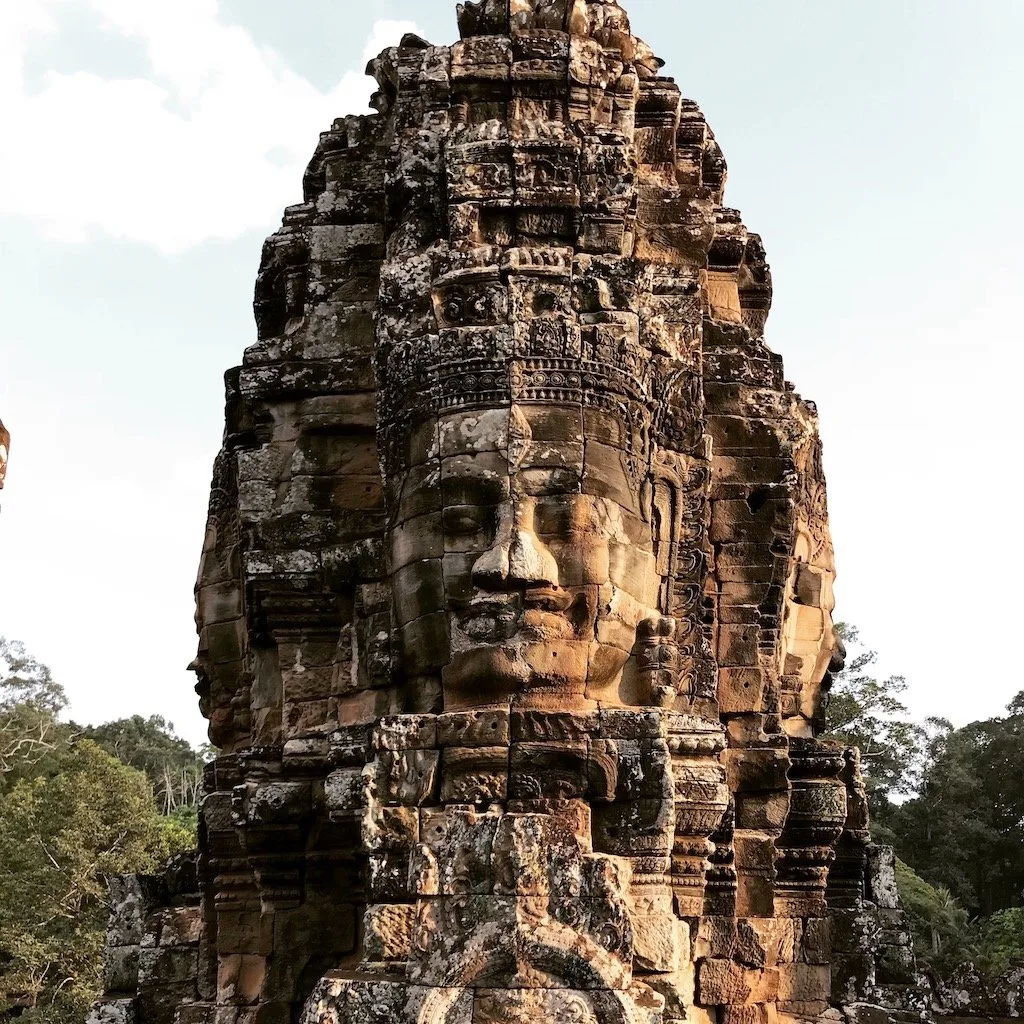
Stone faces carved into the Bayon temple at Angkor Thom, Cambodia, showcasing ancient Khmer artistry and cultural heritage whereangiewanders
Bayon Temple: The Enigmatic Faces of Compassion
Within the walled city of Angkor Thom lies Bayon Temple, famous for its 216 giant stone faces that embody the compassionate gaze of Avalokiteshvara, the Buddhist bodhisattva of mercy. Dating to the late 12th century under King Jayavarman VII, Bayon represents the Khmer Empire’s transition from Hinduism to Buddhism, where smiling stone visages watch over visitors with serene omniscience.wikipedia+2youtube
The temple’s labyrinthine corridors and multiple levels create an almost mystical experience, especially during early morning hours when golden sunlight illuminates the carved faces, creating an atmosphere of ancient wisdom and spiritual contemplation.mysiemreaptours+1
Ta Prohm: Nature’s Cathedral Reclaimed by Time
Perhaps no temple better exemplifies the romantic notion of ruins lost to jungle than Ta Prohm, where massive tree roots embrace ancient stones in a dramatic dance between nature and human creation. Featured prominently in the Tomb Raider film, this 12th-century Buddhist monastery has been deliberately preserved in its partially collapsed state.bruisedpassports+1
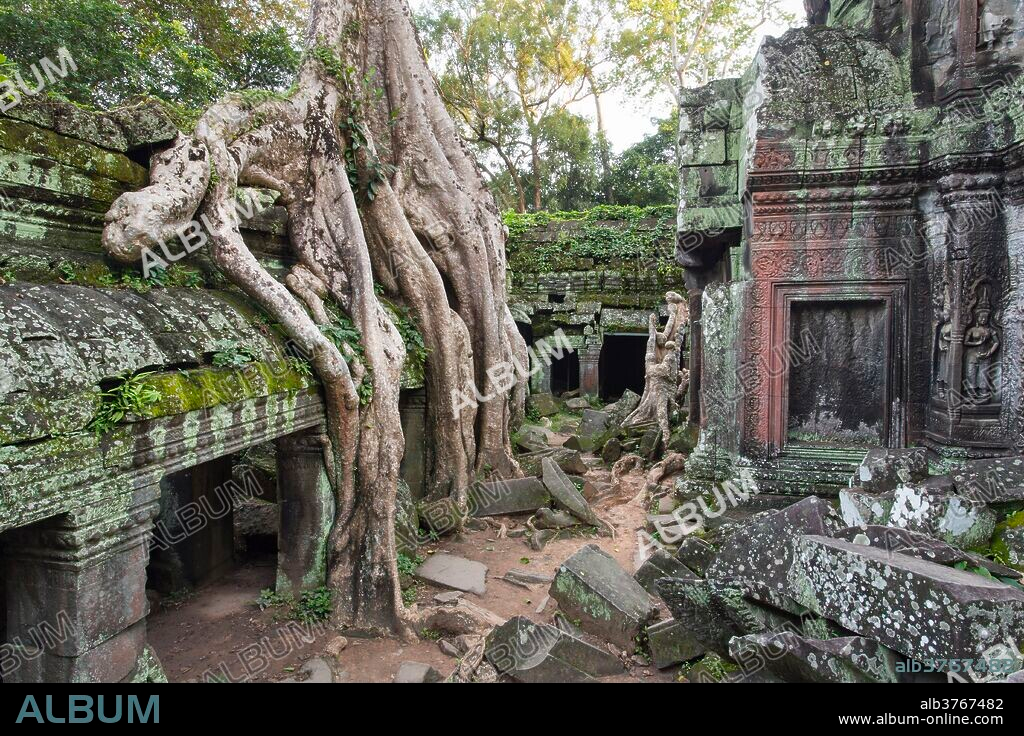
Massive tree roots engulf the ancient Ta Prohm temple ruins in Cambodia’s jungle, highlighting nature reclaiming cultural heritage album-online
The Tetrameles nudiflora and silk-cotton trees have grown through temple walls over centuries, creating cathedral-like spaces where dappled sunlight filters through jungle canopy. Walking through Ta Prohm feels like discovering a lost civilization, where nature serves as both destroyer and preserver of human achievement.bruisedpassports+1
Beyond the Temples: Immersive Cultural Experiences
Traditional Craft Villages: Living Heritage in Motion
The cultural richness of the Angkor region extends far beyond stone temples into vibrant artisan communities where ancient skills continue flourishing. In nearby villages, visitors can witness traditional silk weaving on wooden looms passed down through generations, where skilled artisans create intricate ikat patterns using natural dyes derived from local plants and minerals.hanoivoyage+2
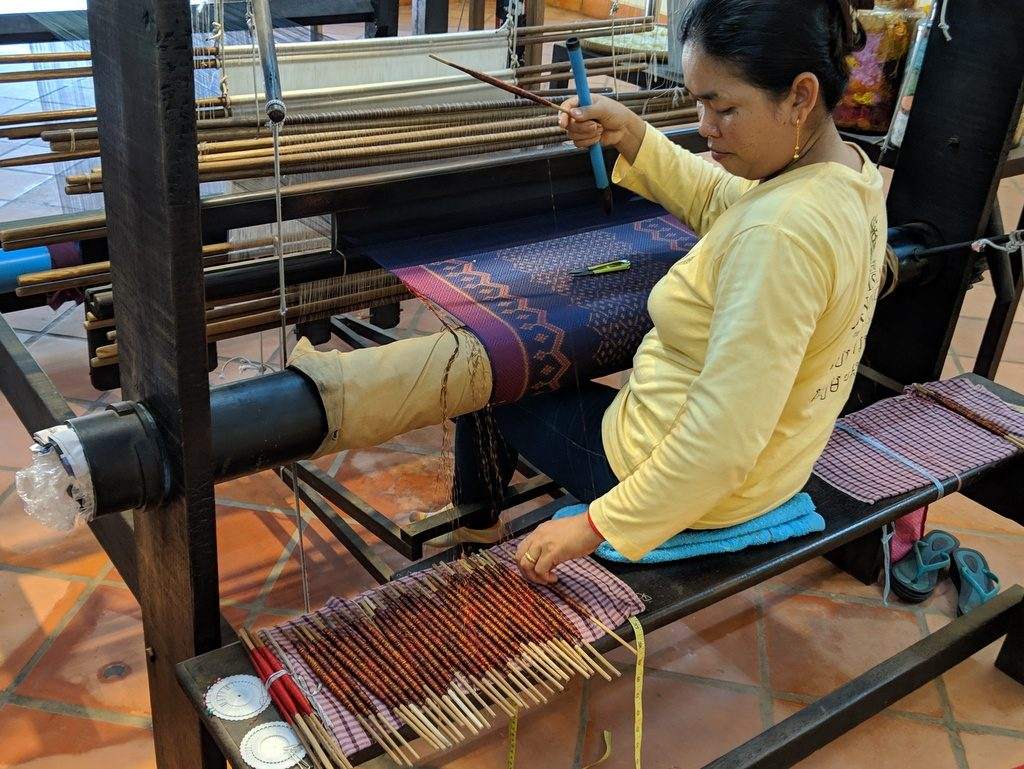
A Cambodian artisan weaving traditional Khmer silk fabric on a handloom, showcasing the rich cultural heritage and craftsmanship anytexture
Kampong Chhnang, meaning “Port of Pottery,” has been Cambodia’s ceramic heart for over 1,500 years. Here, potters still shape clay using time-honored techniques, creating everything from everyday kitchenware to ornate ceremonial pieces. The village of Andong Russei offers authentic workshops where travelers can observe master craftspeople and even try their hand at traditional pottery-making.hanoivoyage+1
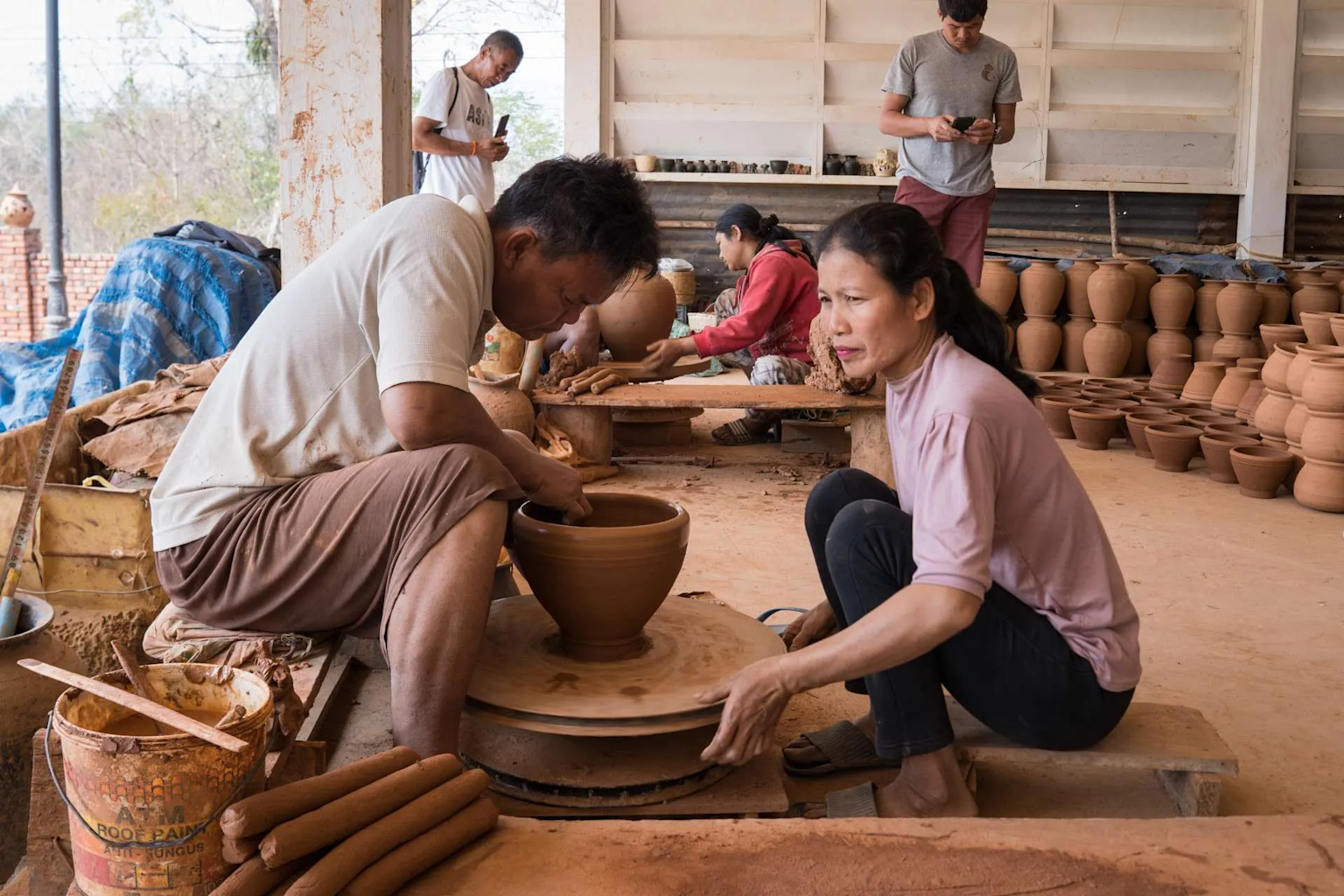
Artisans creating traditional pottery by hand in a rustic Cambodian pottery village workshop, showcasing cultural craftsmanship ockpoptok
Wood carving artisans continue creating intricate sculptures depicting deities, mythical creatures, and Buddhist symbols using precious woods like rosewood and sandalwood. These pieces serve as both artistic expressions and protective talismans found in temples and homes throughout Cambodia.eaglecambodiatravel
Khmer Culinary Heritage: Flavors Rooted in Terroir
Cambodian cuisine represents a sophisticated balance of salty, sweet, spicy, and sour flavors that reflects the country’s cultural complexity and abundant natural resources. The cuisine draws heavily from Cambodia’s exceptional waterways including the Mekong River, Tonlé Sap Lake, and Bassac River, making freshwater fish the cornerstone of Khmer cooking.malis.thalias+3
Traditional dishes like amok – steamed fish curry wrapped in banana leaves with coconut milk and aromatic kroeung spice paste – showcase the sophisticated flavor profiles that distinguish Khmer cuisine from neighboring Thai and Vietnamese traditions. Prahok, fermented fish paste, serves as the umami foundation for countless dishes, representing a distinctly Cambodian ingredient that adds depth and complexity to soups, stir-fries, and dipping sauces.blogs.cornell+2
Local markets like Psar Chas (Old Market) offer authentic culinary adventures where travelers can sample Lok Lak (stir-fried beef with tangy lime-pepper sauce) and Nom Banh Chok (morning noodle soup with green fish curry) alongside exotic tropical fruits and traditional snacks.harindabama+1
Optimal Travel Planning: Timing Your Cultural Journey
Weather Wisdom for Temple Exploration
Cambodia’s tropical climate significantly impacts the temple exploration experience, with distinct dry and wet seasons offering different advantages for cultural travelers. The prime visiting period spans November through February, featuring comfortable temperatures between 70-85°F (21-29°C) and minimal rainfall, creating ideal conditions for extended temple tours and outdoor cultural activities.mysiemreaptours+2
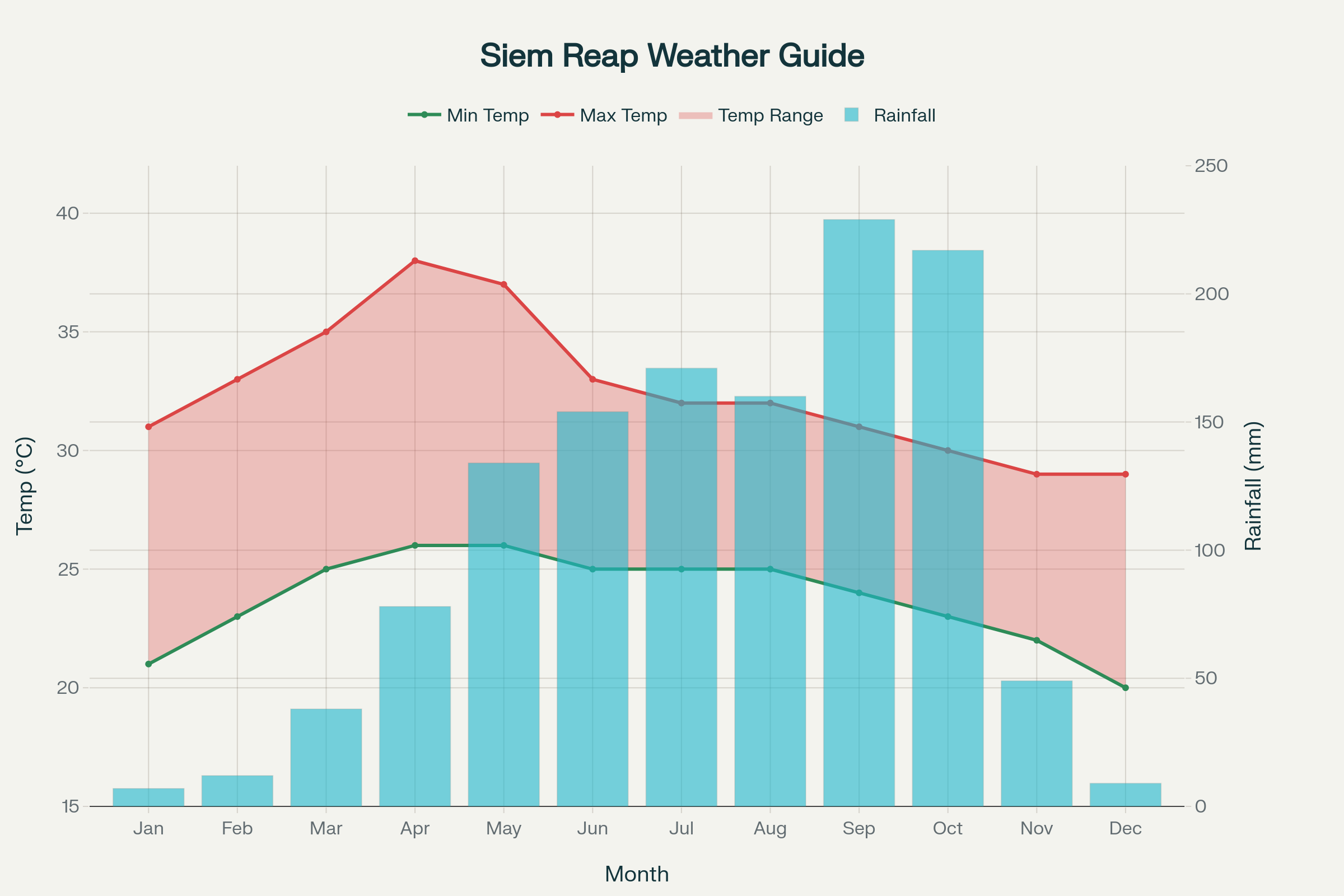
Siem Reap Weather Guide: Monthly Temperature and Rainfall Patterns for Planning Your Cambodia Adventure
The hot season (April-May) brings intense heat reaching 100°F (38°C), but also coincides with Khmer New Year celebrations – a culturally rich period when traditional water blessing ceremonies and festive community gatherings provide authentic cultural immersion opportunities for those willing to brave the temperatures.mekongrivercruises+4
The wet season (May-October) transforms the landscape into lush emerald beauty, with temple moats filling completely and ancient hydraulic systems springing to life. While afternoon showers are common, this period offers dramatically fewer crowds, significantly lower accommodation prices, and opportunities to witness Cambodia’s temples in their most verdant, atmospheric state.mysiemreaptours+2
Strategic Temple Hopping: Maximizing Cultural Impact
Successful Angkor exploration requires strategic planning to balance crowd avoidance, optimal lighting, and cultural significance. Early morning visits (5:30-9:00 AM) provide the best combination of cooler temperatures, golden photography light, and manageable tourist numbers at major temples.machupicchu+2
The Small Circuit route efficiently covers essential temples including Angkor Wat, Bayon, Ta Prohm, and Banteay Kdei, while the Grand Circuit extends to lesser-visited gems like Preah Khan, Ta Som, and East Mebon where peaceful exploration and spiritual contemplation become possible.youtubebruisedpassports+2
Afternoon temple visits (2:00-5:00 PM) often yield surprisingly crowd-free experiences at popular sites, particularly during peak season when most tour groups have departed. Sunset viewing from Pre Rup or Phnom Bakheng offers panoramic vistas over the entire archaeological park.mysiemreaptours+1youtube
Sustainable Cultural Tourism: Traveling with Purpose
Supporting Local Communities Through Conscious Choices
Responsible travel in Cambodia extends beyond environmental considerations to encompass meaningful support for local artisan communities and cultural preservation initiatives. Purchasing authentic handicrafts directly from village workshops ensures that traditional skills continue thriving while providing sustainable income for rural families.hanoivoyage+6
Community-based tourism experiences offer deeper cultural understanding while empowering local residents as cultural ambassadors. Participating in traditional cooking classes with local families, learning silk weaving techniques from master artisans, or joining pottery workshops in authentic village settings create meaningful cultural exchange while supporting community economic development.gocambodia+4
Eco-tourism initiatives around Siem Reap focus on wildlife conservation, environmental preservation, and cultural heritage protection, positioning travelers as active participants in Cambodia’s sustainable development rather than passive observers.icm-corp
Cultural Sensitivity and Sacred Space Etiquette
Visiting Cambodia’s religious and cultural sites requires respectful behavior that honors local customs and spiritual beliefs. Temple dress codes mandate covered shoulders and knees, with lightweight, modest clothing essential for gaining entry to sacred spaces.wander-lush+2
Removing shoes before entering certain temple areas represents basic cultural respect, while maintaining quiet, contemplative demeanor honors the spiritual significance these sites hold for Cambodian Buddhists who continue using them for worship and meditation.nishiv+3
Essential Packing for Cultural Immersion
Successful temple exploration and cultural engagement require thoughtful preparation tailored to Cambodia’s climate and cultural expectations. Temple-appropriate clothing including long, lightweight pants and modest shirts ensures access to all sacred sites while remaining comfortable in tropical conditions.wander-lush+2
Sun protection becomes critical during extended outdoor exploration, with SPF 50+ sunscreen, wide-brimmed hats, and UV-protection sunglasses essential for preventing heat-related issues. Reusable water bottles and electrolyte supplements combat dehydration risks in Cambodia’s hot, humid climate.journeycambodia+1
Photography equipment with backup batteries and waterproof protection preserves magical cultural moments, while small denominations of cash facilitate temple donations and support local vendors selling authentic crafts and traditional foods.nishiv+2
Wander and Escape Down Memory Lane with Voyage JTravels ✈️
My profound connection with Cambodia’s cultural treasures began during an transformative dawn experience at Angkor Wat, where golden sunrise light gradually revealed intricate carvings that have witnessed nearly nine centuries of history. Standing among fellow culture seekers from around the world, I realized that authentic travel moments emerge not from rushing through Instagram checkpoints, but from allowing sufficient time to absorb the spiritual magnitude of places like these ancient temple complexes.
The real magic unfolded during quieter afternoons spent with silk weaving artisans in countryside workshops, where patient hands demonstrated techniques unchanged for generations. Watching master craftspeople transform raw silk threads into intricate traditional patterns while sharing stories of their families’ artistic legacy, I understood that Cambodia’s greatest treasures live not only in stone monuments but in the living culture of its people.
This experience reinforced why professional travel curation makes such a difference for culturally-curious adventurers. Having a knowledgeable JTravel Curator eliminates the overwhelming aspects of planning complex cultural itineraries while ensuring authentic, respectful engagement with local communities. From securing optimal temple visiting times to arranging meaningful artisan workshops and identifying the most authentic local dining experiences, expert curation transforms good trips into life-changing cultural immersions that create lasting memories and genuine understanding.
Planning Your Angkor Cultural Adventure
Cambodia’s Angkor Archaeological Park offers an unparalleled opportunity for cultural immersion that transcends typical tourist experiences. The combination of world-class temple architecture, living artisan traditions, sophisticated culinary heritage, and warm Cambodian hospitality creates ideal conditions for transformative travel experiences.
Optimal visit duration spans 3-5 days for comprehensive temple exploration combined with authentic cultural activities, allowing sufficient time for both major site visits and meaningful community engagement. Strategic planning considering weather patterns, crowd dynamics, and cultural calendar events ensures maximum enjoyment while demonstrating respect for local customs and traditions.wanderwithwonder
Whether you’re drawn by architectural magnificence, spiritual contemplation, artisan craftsmanship, or culinary adventures, Cambodia’s cultural heart beats strongest in the Angkor region, where ancient wisdom meets contemporary creativity in an atmosphere of timeless wonder and discovery. 🏛️✨
Disclaimer: Please note that this travel blog post is intended for educational and informational purposes. While based on general travel knowledge and aiming for accuracy, some anecdotal elements and personal touches have been included for storytelling and illustrative purposes to enhance reader engagement.
Book Now. Please Fill Out the Travel Forms and begin working with a JTravel Advisor Today!
Learn More Voyage JTravels
Like. Follow. Share. Subscribe. Wander and Escape with Us …
#voyagejtravels #cambodiatravel #angkorwat #culturalimmersion #templehoppingguide #khmerheritage #siemreapculture




…Waiting to Hear Your Thoughts… Leave a Comment.